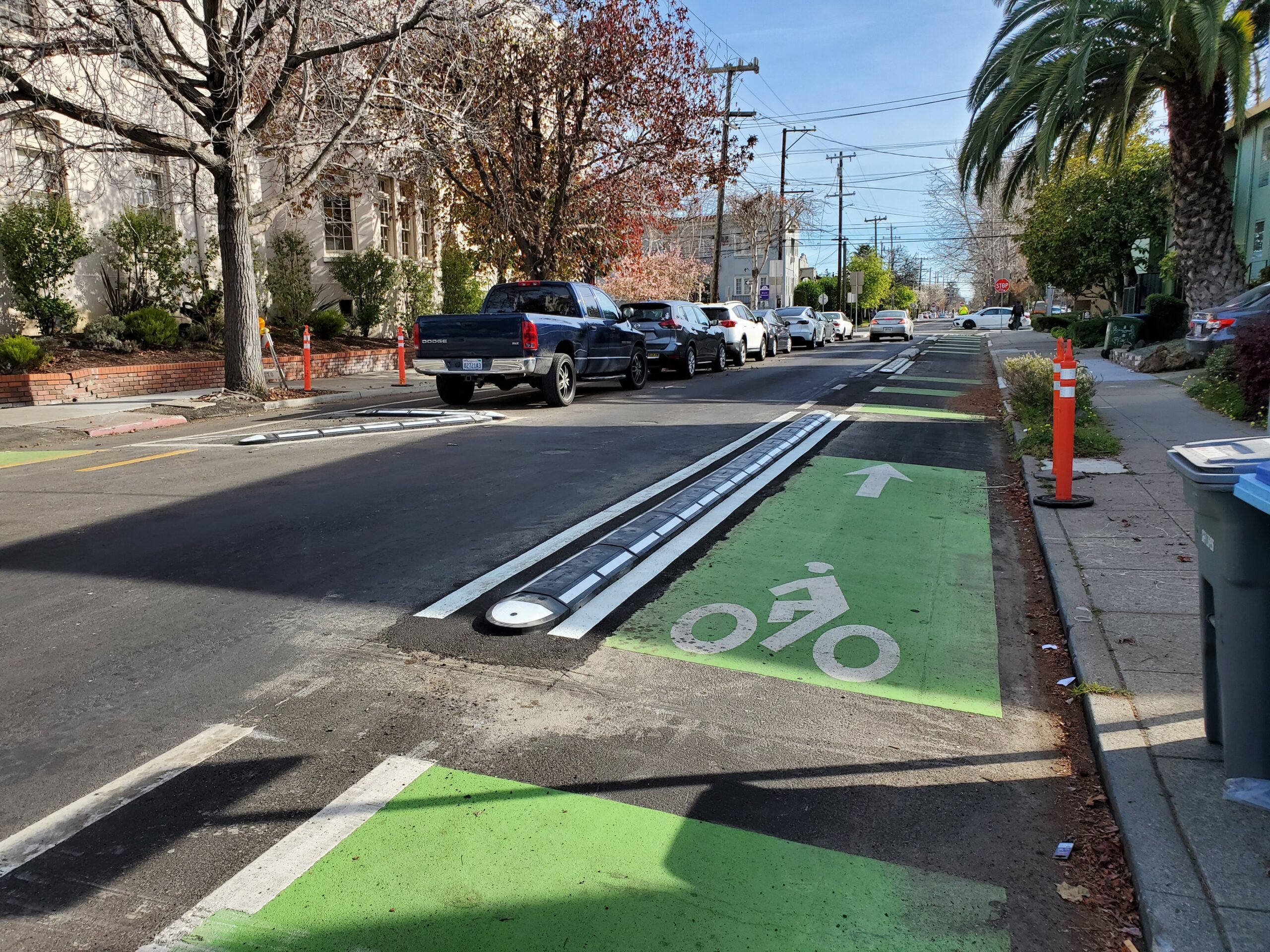

One of the leading causes of accidental deaths in the United States involves motor vehicles in some way: either due to collision with another vehicle, a pedestrian, or stationary object. The rate of vehicular injury is concerning as well.
If you’re responsible for safety on public roads or parking lots (whether public or private), you need to understand traffic calming. It can save lives. It can save money. And it can save you a heck of a lot of worry.
Here are four key traffic calming takeaways for you:
- Slowing traffic is one of the most effective ways to save lives.
- Signage and enforcement alone are not enough.
- Different situations require different traffic-calming tools.
- Material and install method matter as much as the device itself.
What is traffic calming?
Traffic calming is a focused part of the broader concern of traffic control (making sure traffic flows easily and safely). Calming is focused exclusively on safety by slowing traffic to an appropriate speed for the road or parking lot in question.
Slowing the speed of traffic has many practical safety benefits. It gives a driver more time to respond to a hazard, like needing to brake or swerve. It also gives more time to a pedestrian to get out of the way. Most importantly, slower speeds make any collision less deadly, whether to passengers in a vehicle or pedestrians.
Why slowing down saves lives
- More time for drivers to react
- More time for pedestrians to react
- Slower speeds are less deadly
Many different tools work together to achieve traffic calming. Explore a practical list of the most common traffic calming tools below.
Types of Traffic Calming Devices
Speed Limits
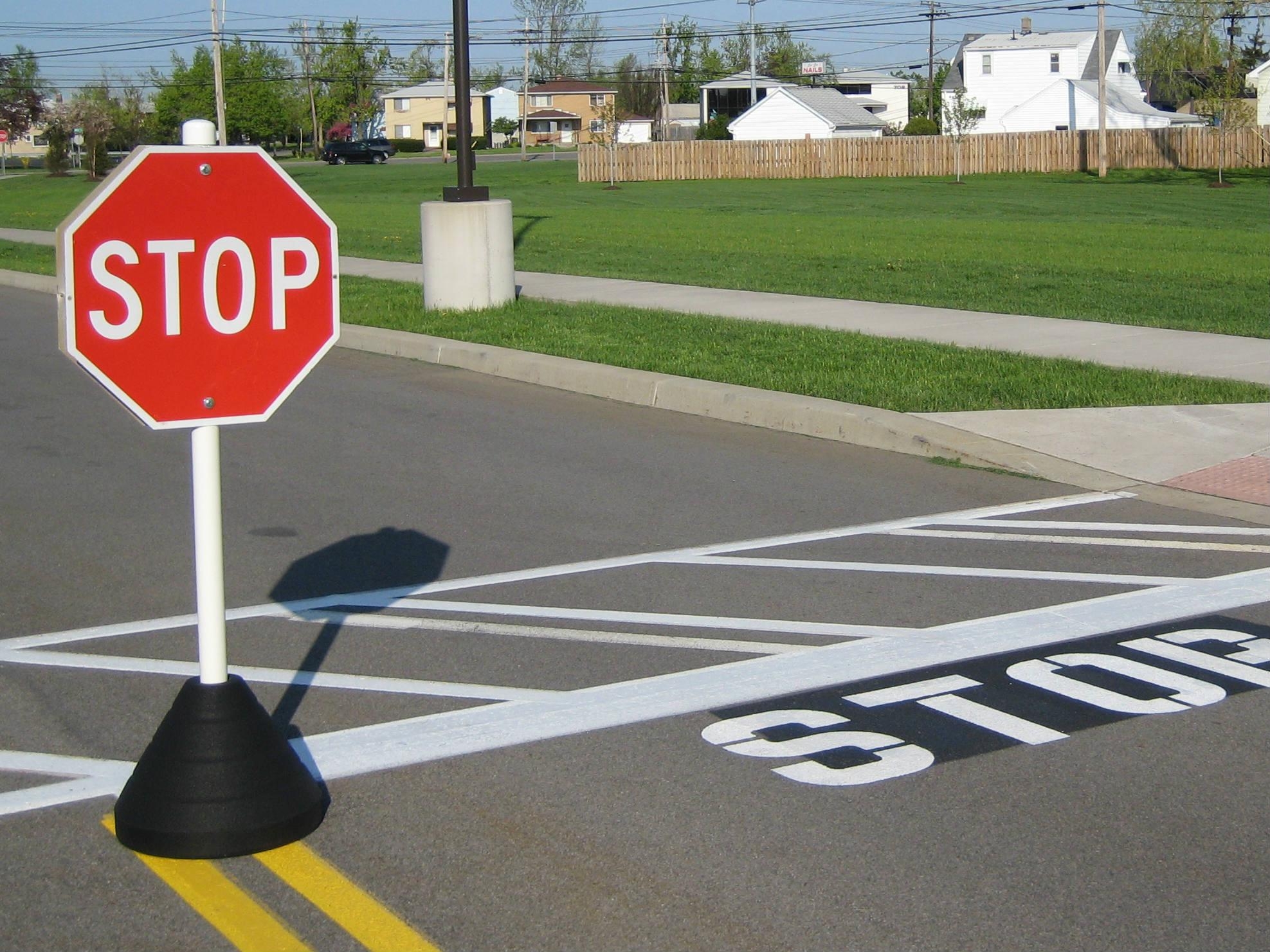
Official speed limits are the most obvious method of traffic calming. They’re signaled by traffic signs and enforced by police. There’s no question that a posted speed limit brings down the average speed on any road, but enforcement can’t be everywhere at once. A huge portion of drivers exceed posted speed limits on a regular basis, even in places like residential areas and parking lots where the danger to pedestrians is highest. Other tools are needed to truly calm traffic.
Speed Bumps
A speed bump is a practical, physical tool to enforce a speed limit. Most speed bumps have a short length (less than 6”) and aggressive angle of ramp. This makes a speed bump the harshest and most effective traffic calming tool. Depending on the height, speed bumps can slow traffic down to 15, 10, or even below 5 mph.
Drivers instinctively brake hard before a speed bump. If they don’t they risk both loss of control and damage to the vehicle. This means speed bumps cannot be ignored the way signs can. And unlike police enforcement, the speed bump is always present.
The disadvantage of a speed bump is that not all roads or even parking lots need calming that aggressive, and too many speed bumps can actually make traffic flow inefficient.
Speed humps
That’s why speed humps were invented. The only real difference between bumps and humps is length and ramp angle. Speed humps are longer (up to ?) and offer a gentler incline and decline. This has two consequences.
First, speed humps slow vehicles down less. It depends on length, but vehicle speed can be easily reduced to 25 mph. Second, less calming means less disruption of traffic flow. Speed bumps on a major road would slow traffic to a crawl. Vehicles can pass over speed humps at speeds sufficient for the continuous flow of traffic in major travel areas.
Speed cushions
Like speed humps, speed cushions more gently slow vehicle traffic. The difference is that speed cushions are designed wide enough to force passenger vehicles to slow, but narrow enough to allow a variety of emergency and service vehicles to pass unimpeded. This allows ambulances and fire trucks to pass through a traffic calming zone at top speed, while still slowing regular vehicles. Speed cushions are particularly helpful in roads and parking lots around airports, hospitals, and other areas with frequent emergency vehicle traffic.
Speed Tables
A speed table is built much like a speed cushion or long speed hump, except it stretches across the entire length of the road. The primary advantage of a speed table is that it allows pedestrians to cross directly on top of it.
This allows a traffic calming device to be placed directly on a crosswalk without impeding pedestrian traffic. It also increases their safety while crossing by elevating them above the road and increasing their visibility to oncoming vehicles.
How to Choose your Traffic Calming Solution
Choosing the right traffic calming tool is just finding the best fit for your particular situation. What matters after that is who is making the tools you use.
Traditional concrete and asphalt speed bumps, humps, cushions, and tables all require extensive construction setups. Once installed, they will crack and crumble over time. When they need to be replaced, they require demolition first before something new can be installed.
Rubber alternatives solve a lot of these headaches, but can come with their own issues. Depending on who makes it, rubber or plastic can be flimsy, breaking down even before asphalt would. It can also contain toxins that could leach into the local water supply. Even recycled rubber and plastic materials sometimes contain toxins when tested.
We built RubberForm to solve these problems. Our speed bumps, speed humps, speed cushions, and speed tables are made from a special composite of recycled rubber and plastic that won’t chip, crack, crumble, or corrode, no matter the heat, cold, or heavy traffic you throw at it.
Installation is easy. You won’t need large crews or heavy equipment. You won’t even need to close the road. Removal and relocation of RubberForm traffic calming devices is so simple, you can remove and store them for winter when your snowplows are on the road.
The simplest traffic calming installation:
- Lay out each piece
- Drill anchor holes
- Install anchors
- (To remove, just do the reverse!)
Where to go from here
If you’re responsible for any roads or parking lots, you need to protect the people who travel on them, by car, public transport, or on foot. This guide laid out a few principles to help you choose which device best suits your needs. We hope when it comes time to purchase them, you’ll consider a long-lasting, easy to use traffic calming tool from RubberForm. When you’re ready to discuss the simplest traffic calming on the planet, give us a call.
Date Published: February 27, 2026