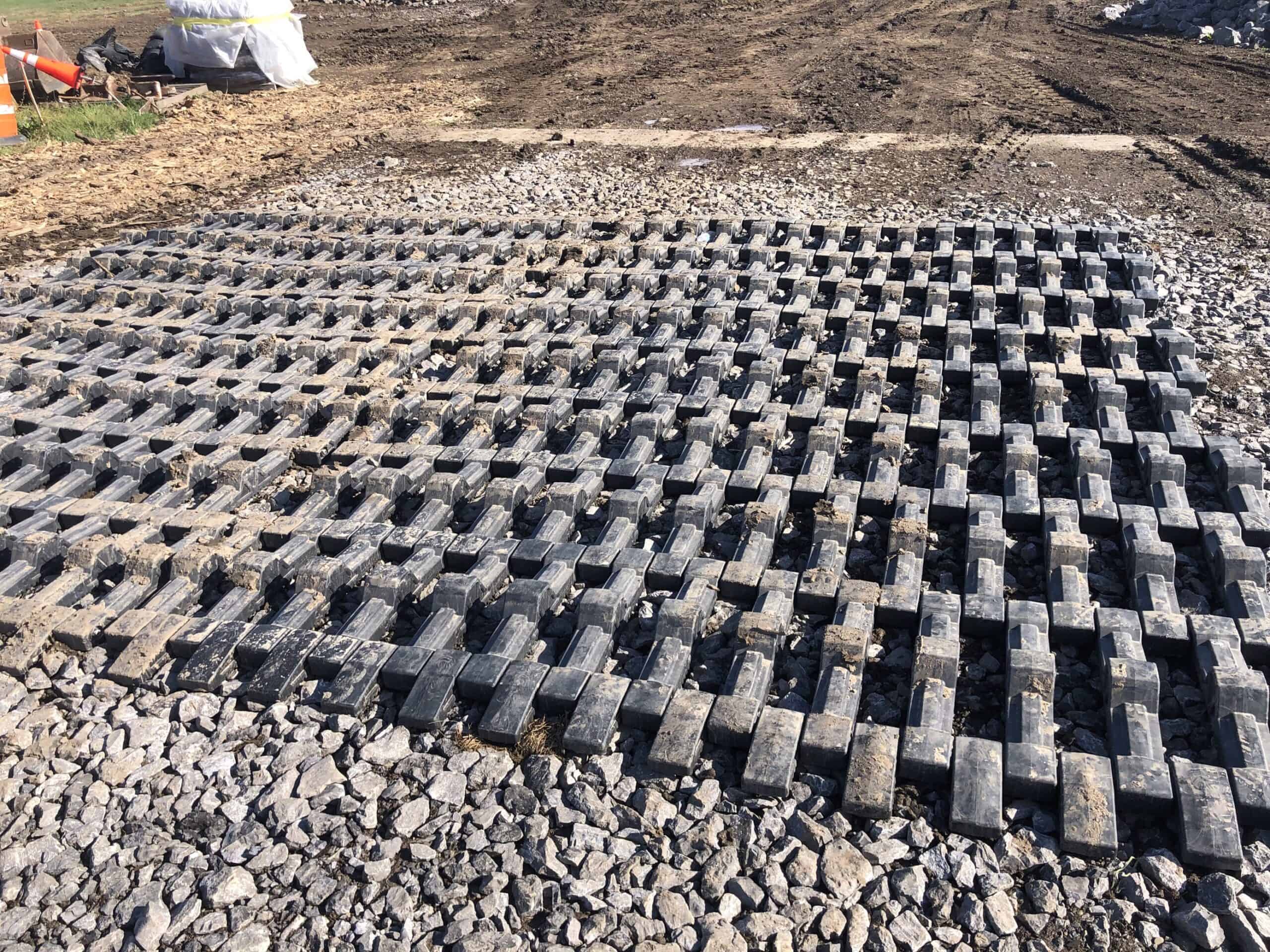

Ever tracked mud or dirt into your house? Or had kids, pets, or neighbors track it in? It’s constant work to keep the entrances to your house neat and clean. Construction safety at site entrances and exits has a similar problem, only it’s concerned with tracking dirt and mud out.
When construction vehicles track dirt and mud out of construction sites (called trackout), the damage is much more than an annoyance. It affects public roads, stormwater and drainage systems, and local plant and animal life. For a construction company or property owner, it can also mean huge fines.
Dirt and mud tracked out of a site are bad enough, but oil, grease, and bits of construction debris can also be tracked out where it shouldn’t be, particularly in our waterways. Because environmental pollution has far reaching and mostly irreversible consequences, governments have enacted stricter trackout regulations.
That’s why engineers and innovators have come up with so many different methods of trackout control. We’ll discuss what trackout control is, why you need it, and some modern innovations to help you better control trackout.
Key Takeaways
- Trackout is both an environmental problem and liability risk for you
- The usual methods of trackout control waste time and money
- Modern trackout control innovations can save you time and money, particularly in the long run
- Simple, durable trackout mats are one of the best long-term trackout control solutions
What is Trackout Control?
Trackout control is any number of devices, techniques, and systems used to prevent dirt, mud, and other debris from leaving construction sites as vehicles exit.
An SCE (stabilized construction entrance) is the most common trackout control method used at the exits on construction sites. SCEs are commonly referred to as trackpads.
These trackpads are also the EPA standard for trackout control. They usually consist of rocks placed on a fabric that stretches across the exit. The fabric protects the ground underneath and helps keep the rocks in place. As mud and sediment-caked tires roll over it, the rocks jostle the tires and shake the excess dirt free. The angular rocks can also dig into the mud to help dislodge it.
There are many problems with traditional stabilized construction entrances. The rockbed needs to be deep, 6 in or more, for maximum efficiency. That takes more setup time and effort to implement, and time is tight for every construction job.
Then there’s the maintenance. Those rocks will get caked in mud and dirt themselves and get compacted down, greatly reducing trackout control efficiency. The rocks need to be turned over from time to time to prevent compaction and the buildup of dirt on the trackpad’s top surface. These pads might be 12 or more feet wide and 50 or more feet long, so turning over an entire pad’s worth of rocks is no easy task.
That’s why modern trackout control devices were invented as a simpler, faster alternative.
Modern Trackout Innovations
- Trackout Pads
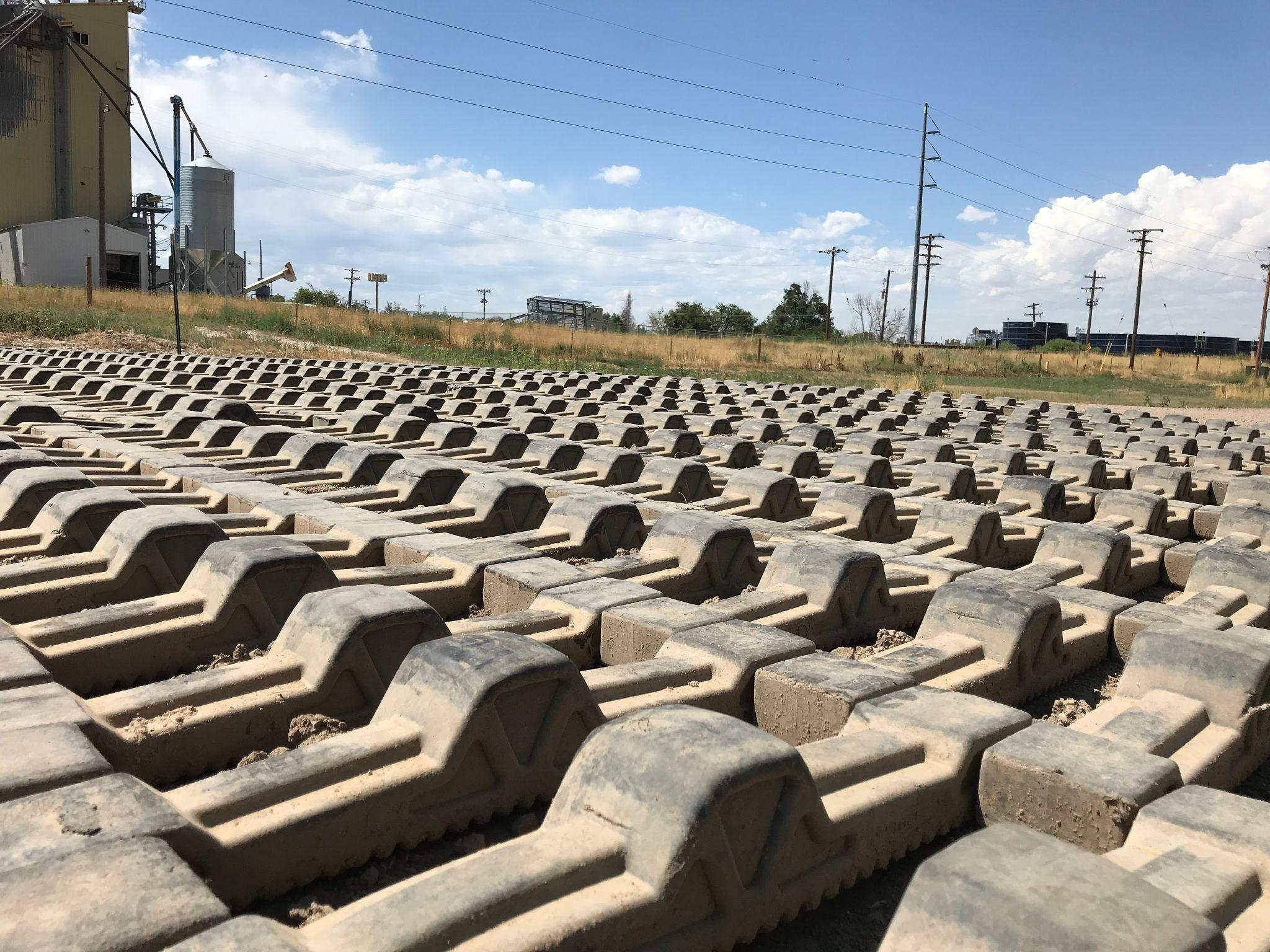
These are specially-constructed devices that mimic the effect of the rock-and-fabric trackout method, with easier setup and maintenance. They are typically designed with alternating rows of pyramids that enter the lug treads of a tire, loosening the debris and making it fall onto the base of the mat. The mats are deep enough that the sediment they collect shouldn’t reattach as vehicles drive over them. These pads are portable and can be moved between job sites.
- Trackout plates
These are reusable devices that have rails, pipes, or grates designed to dislodge debris from a vehicle’s tires, wheels and undercarriage before it’s driven off a construction site. They’re sometimes called “rumble” plates or grates. They are portable, similar to trackout pads.
- Wheel Washing System (Washpit)
Typically an elevated platform where vehicles are cleaned up before leaving the site. This platform usually also has walls or rails. There are high-velocity side and bottom water sprayers too to help remove mud in hard to reach areas. The walls serve to prevent the water spray from drifting. The sprayers are controlled by programmable controls and sensors, which trigger appropriate water output for each truck that goes through the system.
Washing systems are often combined with another method of trackout control like the pads or grates mentioned above. If you are working on a very high trackout project, using both methods together is more effective at removing trackout than just one.
Why You Should Control Trackout
According to EPA regulations meant to minimize sediment trackout, you must limit the use of vehicles to designated exit points and use trackout removal techniques at every exit that leads onto a paved public road. Any excess debris should be removed before the vehicle gets onto the paved road.
If you do the bare minimum to comply with trackout regulations, you’ll probably avoid government fines. But you’ll waste absolute truckloads of time setting up and maintaining your stabilized construction exit. Using one or more of the modern trackout control innovations will save a ton of time and money in the long run.
And that’s where RubberForm comes in.
How Convenient Can Trackout Control Be?
We’re obsessed with constant innovation at RubberForm, which is why we set out to create the simplest trackout mat on the market. Here’s just how easy it is to use:
- Lift the mat up with a front loader
- Lay it out
- Get to work
You can set up your construction entrance or exit in mere minutes. And teardown is just as simple: you just lift the mat up again, fold it up, and transport it to your next work site.
Other trackout mats need anchors or brackets to hold them in place, or special tools to clean them out when they get clogged with mud. But we engineered our trackout mats for maximum usability. Here’s a list of things you’ll won’t be needing anymore:
- No calling 811
- No digging
- No anchors
- No brackets
- No rocks or gravel
- No special cleaning tools
To clean our trackout mats, just lift them up and shake them out. Then you can lay them down and get right back to work.
We make mats of varying sizes (see our spec sheet for a full list) that you can mix and match to fit any length and width requirement for your project. Our mats are made from a special recycled rubber and plastic composite material that won’t chip, crack, crumble, or corrode no matter the searing heat, freezing cold, or heavy vehicle traffic it endures. If you do somehow manage to damage one of our mats, the system of blocks and wires is fully modular. Call us for a replacement block and you can remove the broken one and pop on the replacement. That means you can use our mats at job after job for years and years to come.
Conclusion
Effective trackout control protects more than your jobsite. It keeps public roads clean, prevents sediment pollution of waterways, and helps preserve the environment of your local community. Modern trackout solutions make it easier to meet environmental regulations while minimizing disruption to your team and your neighbors. With the simple safety of RubberForm’s trackout mats, you can reduce pollution, prevent costly fines, and demonstrate your commitment to keeping your community beautiful.
When you’re ready for the easiest, most durable trackout control solutions send us a message or give us a call to get started!
Date Published: July 16, 2021