

Taking Your Construction Site to New Heights Safely
If you’ve ever worked construction, you know that construction site cable management is not handled in a particularly safe or consistent way. In 2011, Roger Smith finally decided to do something about it. He was a lifelong construction worker and business owner from Tampa Florida.
“Three years ago I witnessed a worker getting injured”, said Smith, inventor and patent owner of the Portable Electric Cable Support Tower. “Someone had added a nail to the top of a wood constructed tower. When it tipped over, the nail hit the worker below, missing his hard hat and hitting him in the neck”. This traditional way of keeping potentially dangerous electrical cables off the ground in construction areas was cumbersome, costly and unsafe.
“After the accident, someone suggested I think of an alternative to the wood towers and I began designing the portable tower”. The end result was the RubberForm® Portable Electric Cable Support Tower (PECST).
In this article, we’ll discuss the following key takeaways:
- Traditional jobsite cable towers create serious safety risks
- Cable management is critical for both worker safety and compliance
- RubberForm® cable support towers are safe, effective, and reusable
- Durable, reusable cable safety saves money in the long run
What’s the problem with a traditional cable support system?
Smith explains: “Commonly a truckload of lumber has to be brought into the site. Time and manpower has to be spent constructing each needed tower to meet safety requirements. When the project is completed, each tower has to be torn apart and the wood is no longer usable”. He added, “The whole process is repeated at the next job site”.
The wood towers that have been used for ages in the construction industry have two big downsides. The first is that they are typically built on-site as needed. There’s no template or blueprint. The workers take materials they have lying around and cobble them together. These jury-rigged towers aren’t built to last–and they don’t. It’s an accident waiting to happen.
The other major issue with these towers has to do with materials. Electrical cables are dangerous because they transmit electricity. A torn or frayed casing or wire could electrocute a worker. But these towers use large numbers of nails and screws that conduct electricity in their construction. To make matters worse, while wood doesn’t conduct electricity while dry, it can when it’s wet. The very thing meant to keep workers safe is putting them in danger.
How is the RubberForm® cable support tower different?
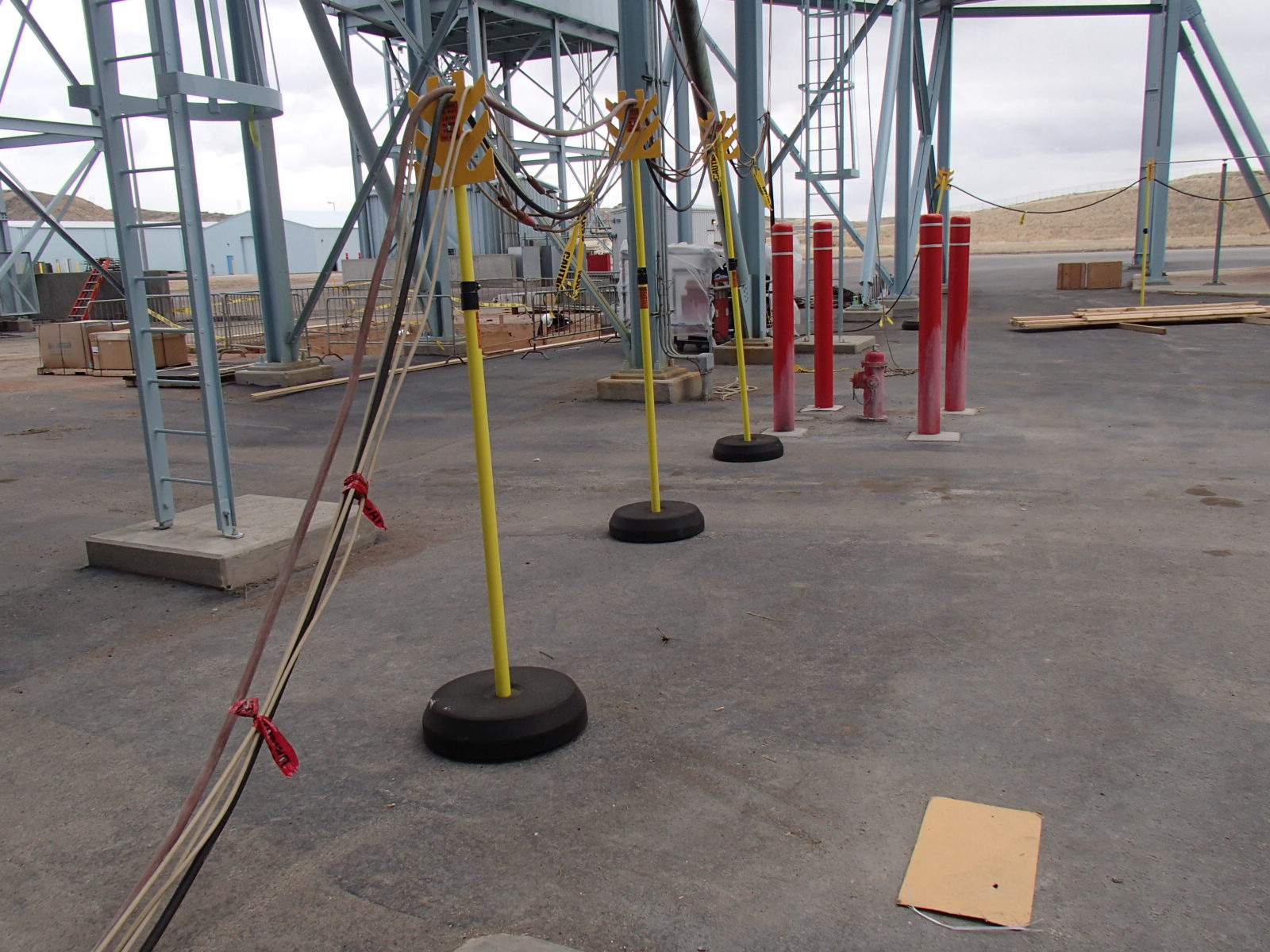
The PECST addresses one of OSHA’s top 10 most frequently cited standards and covers the NEC-National Electric Code Clearance Guidelines requirements. The required onsite safety guidelines include the practice of keeping electrical cables suspended in the air so they are NOT in contact with the ground so the risk of accidental electrical shock to a worker is greatly reduced. The PECST is portable, reusable, and easy to store when not in use. This improves overall job site performance, saves time, money and adds to the bottom line.
Above all else, the PECST provides a safe environment for workers. A single tower is light enough that one person is permitted by law to move it by just laying the tower on its side and rolling it into position. Drawing on his years of construction experience, Smith designed the telescoping, lightweight, non-conductive tubular pole of the tower with a cable mount head including 7 cable slots that will hold 100 pounds of cable per tower. Enough for any job site. With safety in mind, the base is made of non-conductive recycled rubber and will not tip. Smith shared, “I contacted RubberForm® because I needed a firm, steady base. They had the expertise and flexibility needed to develop and complete the total product.”
6 reasons to love RubberForm® support towers
- Non-conductive
- Adjustable height
- Holds up to 100 lbs. per tower
- Reuse again and again
- Base made from 100% recycled materials
- Never worry about electrical cable safety again
Do I need a standard cable tower or heavy duty?
Good question! Heavy duty has a heavier base than the standard, which provides more stability when at or near the weight limit or height limit. It also allows towers to be spaced farther apart than the recommended spacing for standard towers (10 ft). The heavy duty cable support tower is generally more resistant to tipping from heavy wind or being bumped or jostled.
Don’t waste time and create unnecessary hazards for your team by cobbling together homemade cable towers at every work site. Take your team’s safety seriously and give us a call to talk about which RubberForm® cable support towers are best for your unique requirements. We’d love to help you out.
Date Published: July 2, 2020