
You probably have a long list of responsibilities. And I’m just going to guess that your parking lot is not particularly high on that list. That’s okay, we get it.
But a little time and money spent on your parking lot can go an awful long way toward benefitting you, your team, your customers, and even your neighbors.
We’re going to suggest you go through a little parking lot inspection checklist. It will have things on it you can either check off if you have it, or remedy if you don’t.
In this article, we will discuss the following key takeaways:
- Your parking lot is your chance for a big first impression
- A simple checklist can uncover easy safety and efficiency wins
- Good signage and safety tools work together
- You want portable and durable safety products
Why bother with a parking lot safety checklist?
It’s a fair question.
Unless you own a parking garage or rental lot, your parking lot isn’t your literal business. It’s just attached to it.
But it’s still important.
Your lot is probably the first thing a customer or team member sees. It’s definitely the first thing they experience. So your lot is the first opportunity to make an impression on either a customer ready to be persuaded or a team member preparing for their workday. A safe, branded, well-planned and maintained parking lot can be a huge advantage.
Your lot is also a major source of friction. Lots that are too small drive people to park farther away. Lots with poorly designed traffic flow force folks to spend more time than they’d like just navigation through your lot. Confusing or nonexistent signage can add to frustration and time spent trying to figure out where to park or how to exit.
Last of all, your parking lot is a major source of potential liability. Vehicle-on-vehicle accidents are bad enough, but any place like a parking lot that forces pedestrians and vehicles to share space is a recipe for a potential lawsuit should poor planning, signage, or design contribute to an accident.
Luckily, all of these issues are easy to fix.
Your parking lot checklist
The first part of your existing lot to check is your signage.
You may not have any signs at all. For some small, simple lots that’s probably okay. Most parking lots would benefit from two types of signs: traffic flow and area delineation.
Traffic flow keeps vehicles moving smoothly and safely through your lot. It includes directional signs, entrance/exit, safety signs like “stop” and speed limits, and anything else that aids navigating your lot and your facility. However you arrange your traffic flow, you should maximize the ease of coming and going quickly and minimize the opportunities for pedestrians and vehicles to cross paths.
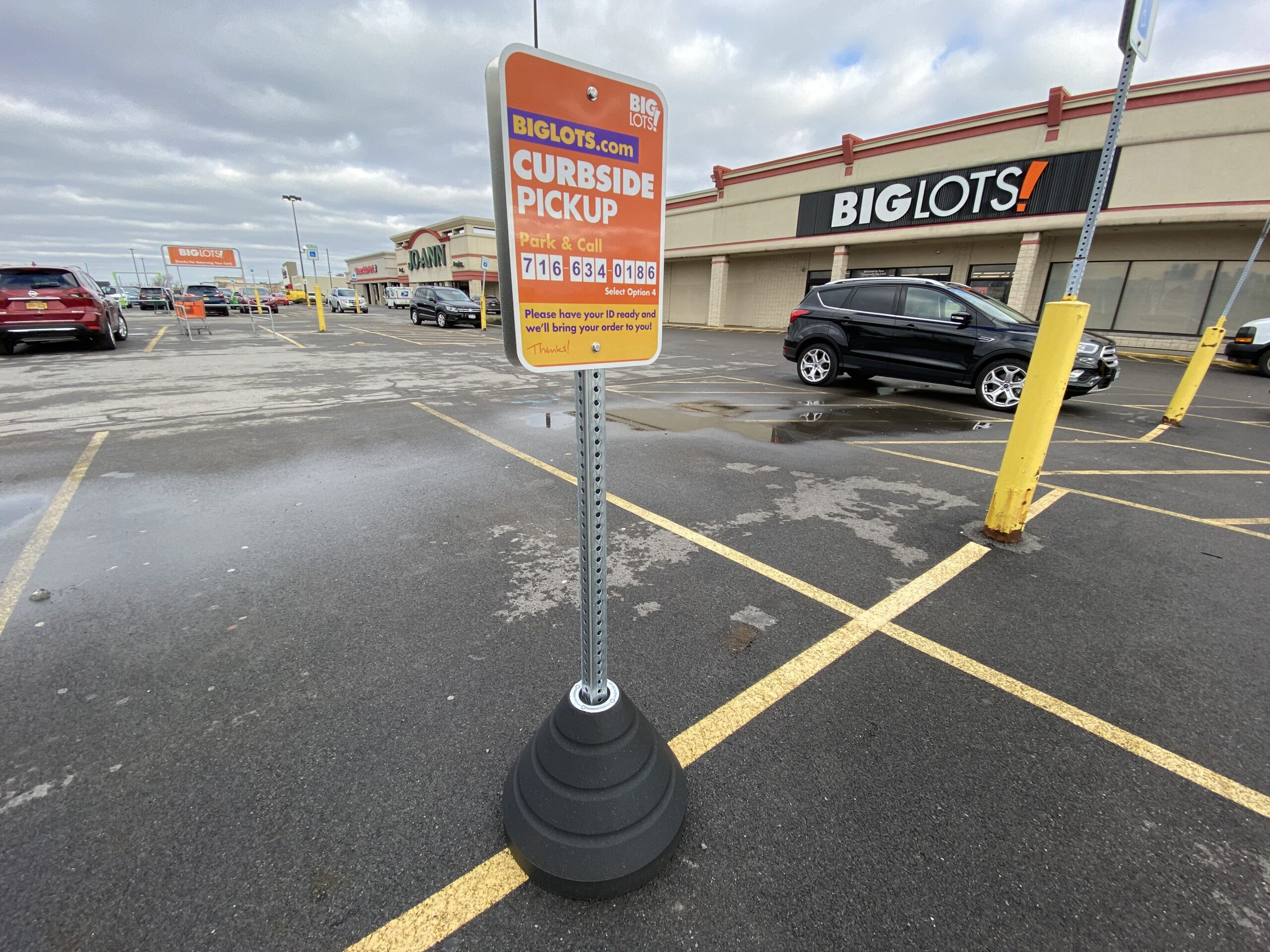
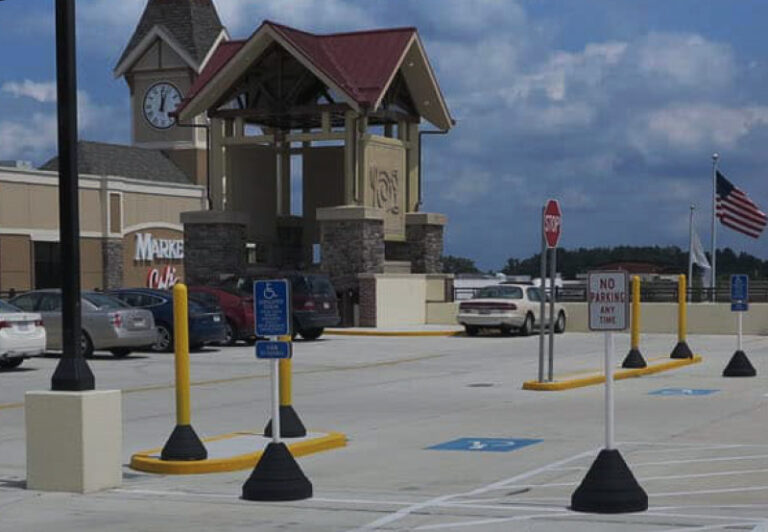
The other type of sign delineates what the different spots in your parking lot are for. This includes no parking signs, handicap, emergency vehicle, e-charging stations, visitor parking, and curbside pickup. Placement for these should maximize clarity and convenience (it shouldn’t be hard for first-time visitors to find the visitor parking).
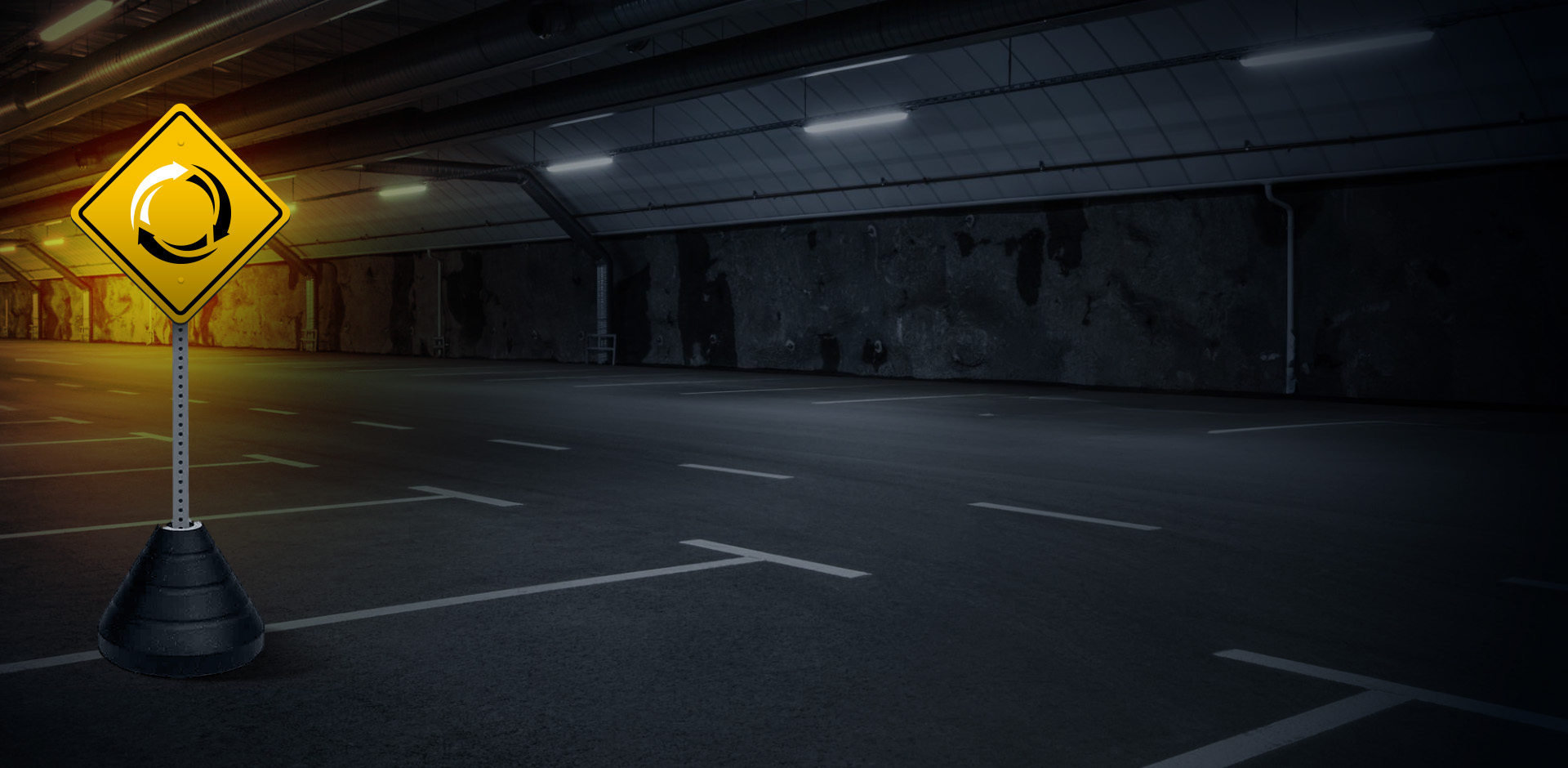
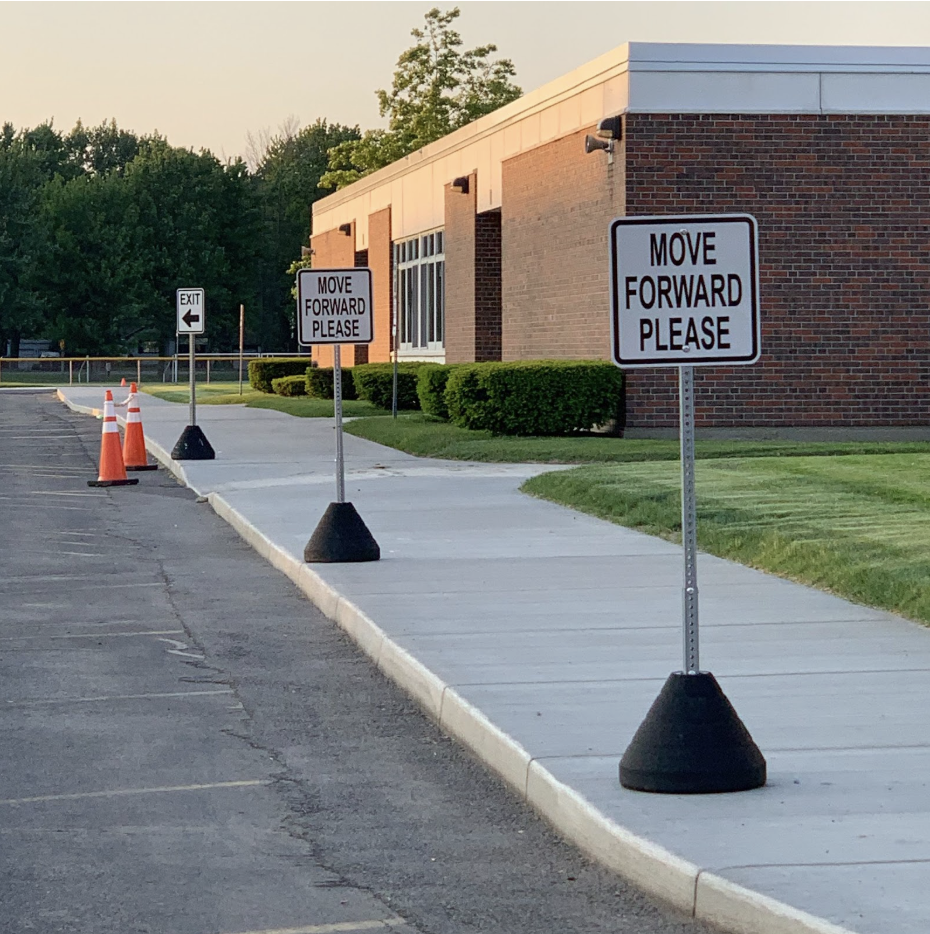
The old-fashioned way to do signage was permanent installation into the pavement. These signs rarely fell over, but looked ugly and required demolition to move. Cheap plastic base signs move without much effort, but are still ugly and tend to break, crack, or blow over too easily.
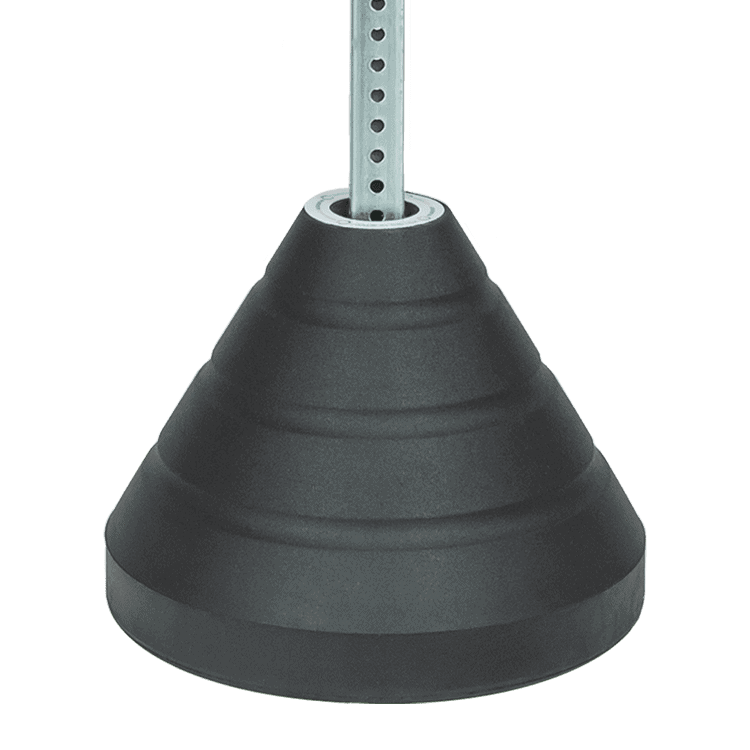
That’s why twenty years ago, we innovated our RubberForm® Portable Sign Bases. They’re light enough for a single person to tip over, but heavy enough to stay in place in the wind. They’re round, so once you’ve tipped them, it’s easy to roll them into place anywhere on your lot. If you ever need to relocate them, just tip and roll again.
How can I create this “branded experience” you mentioned?
This is the next step on our checklist.
Does your parking lot have wheel stops? While any lot can be perfectly functional without them, they serve multiple safety and branding roles.
Safety first. Wheel stops prevent vehicles from easily crossing them and hitting other vehicles, pedestrians, or mounting a sidewalk and causing more damage there. They also do a better job delineating parking spots than lane lines do, particularly in low visibility conditions like night, rain, or snow. It’s easy to miss some lines, it’s harder to miss a wheel stop.
We engineered our RubberForm® Wheel Stops with customizable color polygons. You can brand our wheel stops with your colors–we can even print your logo on them. You’ll have the best-looking lot on the block in no time.
You can also brand your lot with a few other custom products: we carry recycled aluminum signs you can customize, color covers for our sign bases, and bollard covers to go over your concrete or metal bollards for high visibility and brand color coordination.
What’s left?
The final items on our safety checklist are all about speed limit and delineation.
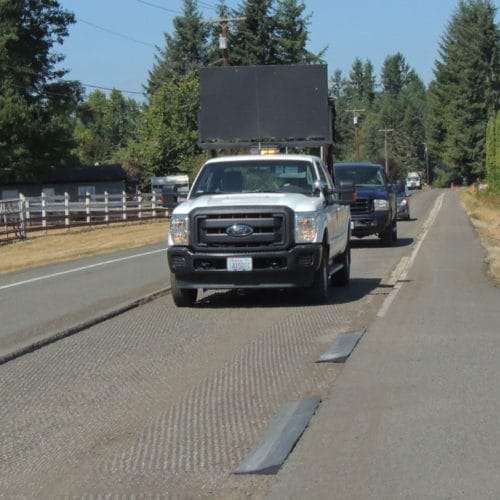
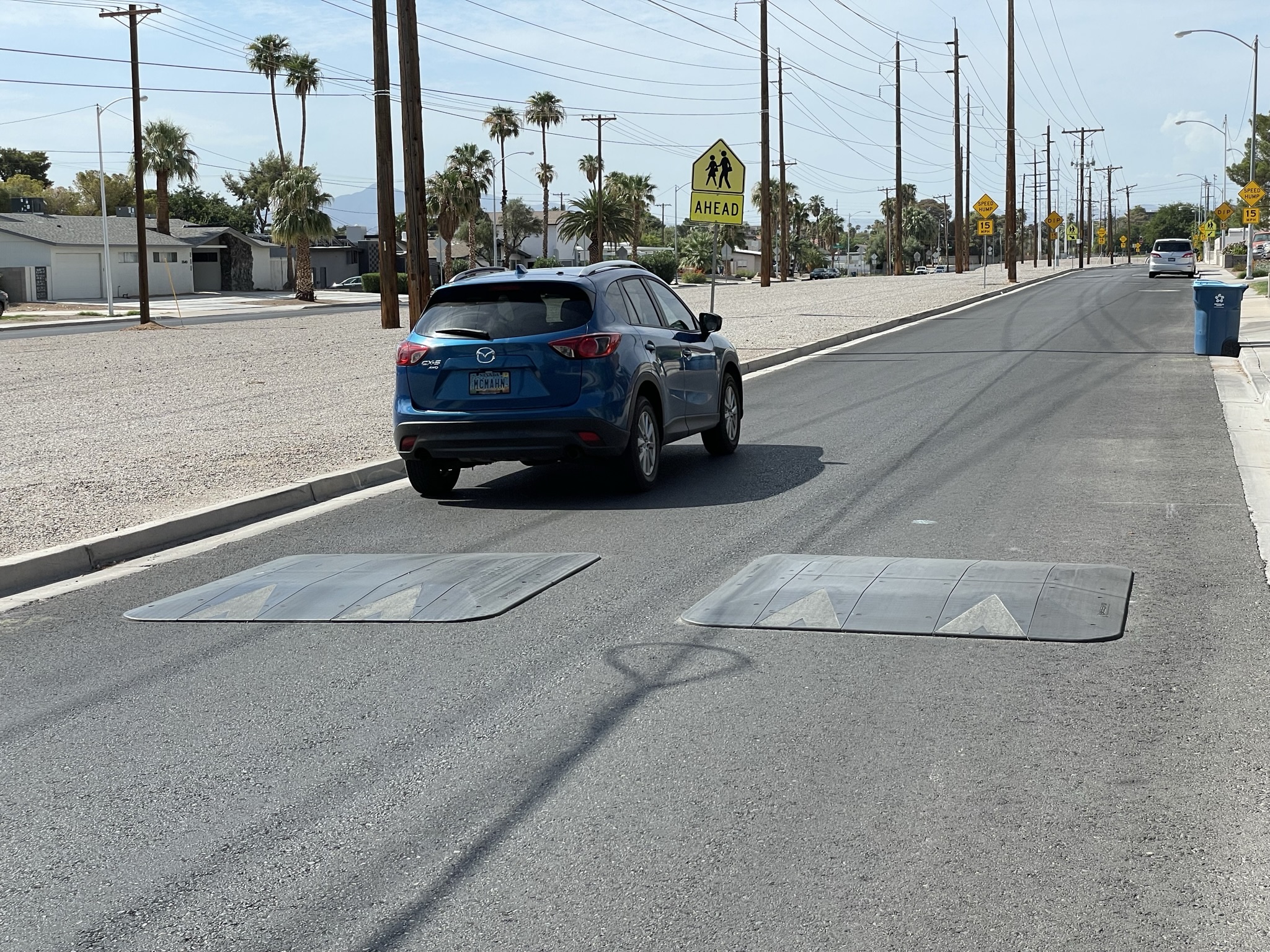
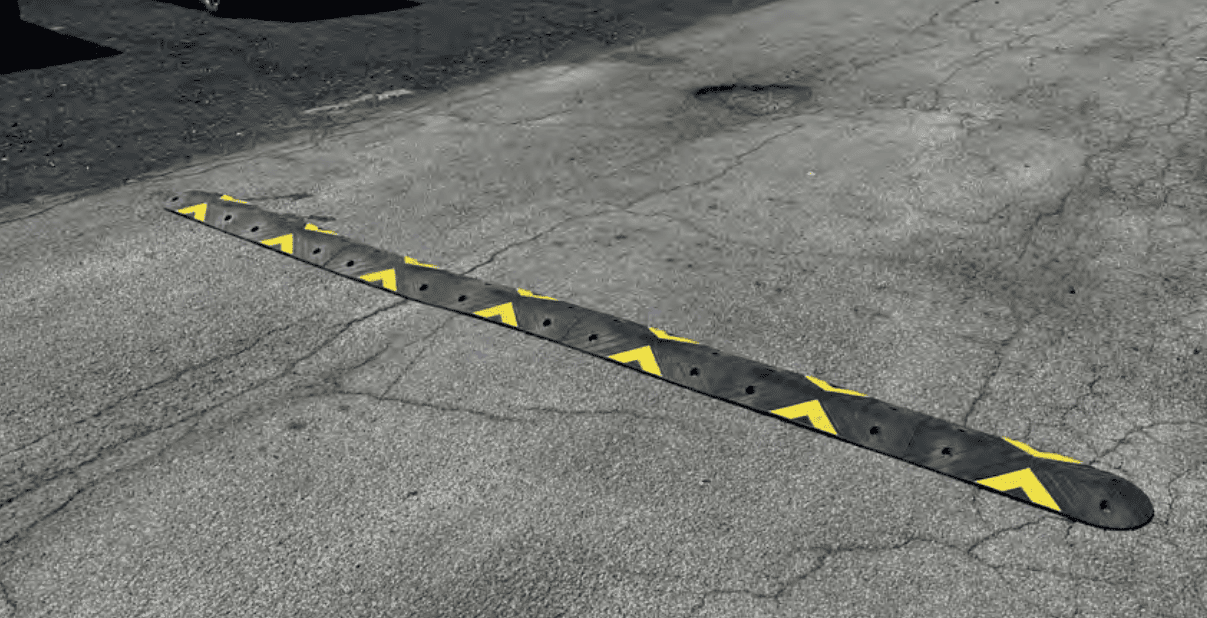
You can use our sign bases to post a speed limit, but how do you enforce it? Use a traffic calming device like a speed bump, speed hump, or speed cushion.
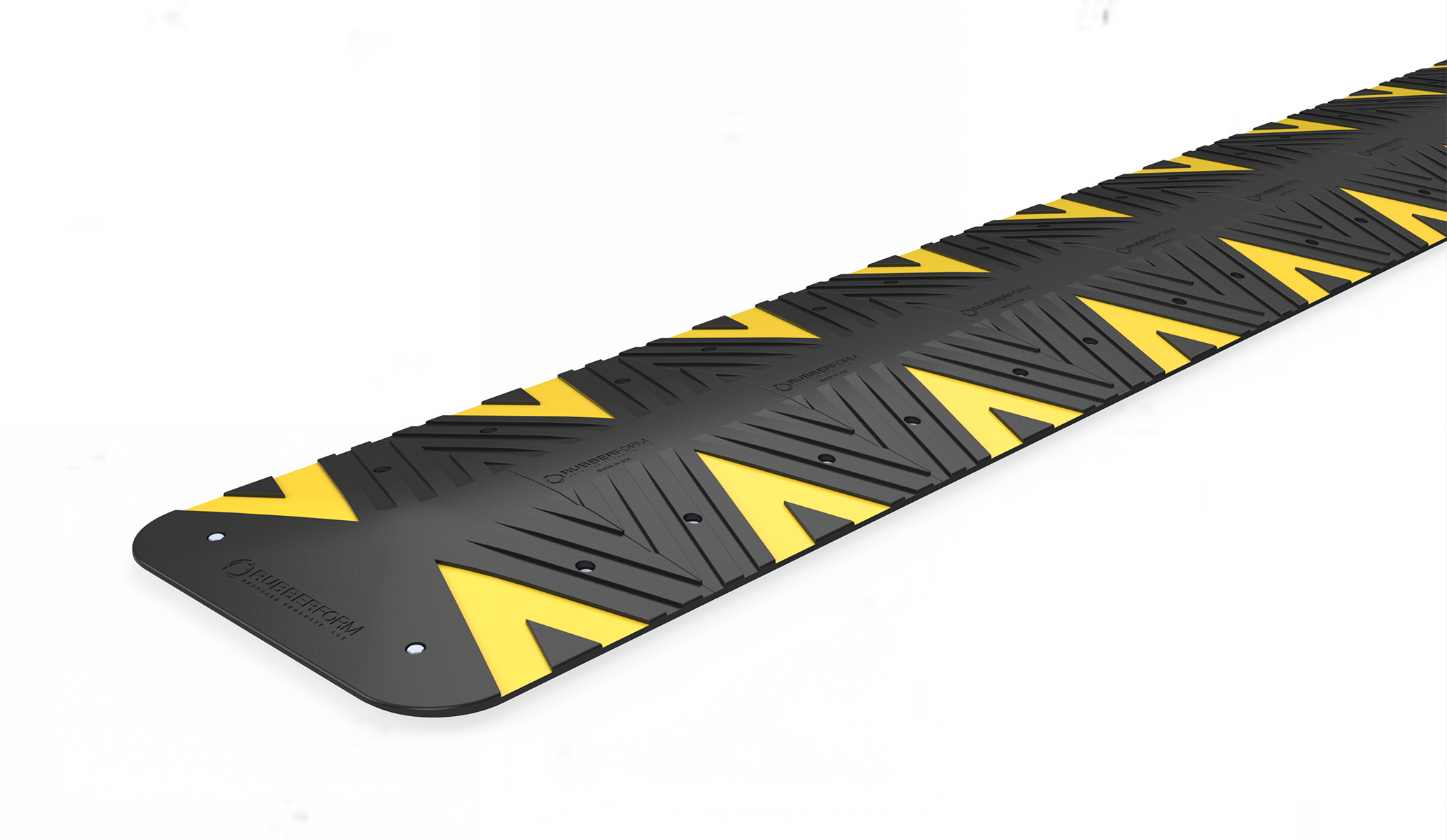
All of these traffic calming devices will force vehicles to reduce speed. The only difference is the severity of the speed reduction. Speed bumps grant the sharpest speed reduction. They’re ideal for pickup and drop-off areas with lots of pedestrians. Our SB-10 speed bumps can be installed permanently in a parking lot, and our MLSB series speed bumps can be permanent or temporary. They’re so easy to lay down and gather up you could deploy them only for special events, for example.
Speed humps and speed cushions are both gentler than bumps, reducing speed less and allowing smoother traffic flow. Speed cushions are uniquely designed to allow wider vehicles (particularly emergency response) to pass unimpeded.
The final need your parking lot might need is lane deterrence or enforcement through portable bollard bases. They’re great for cordoning off areas of reserved parking or protecting no-go areas like pedestrian walkways. Being portable just means they are easy to adjust as your needs change. Perfect for special events.
Checklist complete
How’d the checklist go?
- Do you have solid signage?
- Is your lot branded with your colors and logo?
- Does every spot have a wheel stop?
- What about your traffic calming situation?
- Do you need any no-go areas delineated with bollards?
With a solid plan and the right equipment, you’ll have a safe, smooth-flowing parking lot that gives your customers and team a fantastic branded experience from parking to purchase (or whatever they’ll be doing inside).
When you’re ready to check off any missing items, give us a call. We’d love to help you perfect your parking lot.
Date Published: April 13, 2026