
Every construction crew understands the need for strong safety practices on the job site. Ask any crew member for their “worst accident” story, and you’ll hear more than you want to. But compliance is a different matter altogether. For a lot of construction teams, it’s just a pain.
Take trackout and erosion control measures. They’re time-consuming and sometimes expensive to implement. Nobody looks forward to building a stabilized construction entrance. But you need to, or you and the property owner could be fined and/or legally liable for any contamination of the local water system.
But first, what is trackout exactly? It’s simply any dirt, mud, rocks, debris, or oil that is tracked out of your construction site and onto public roads and, ultimately, into public water systems. Trackout control then is any method of preventing the trackout, generally by shaking, dislodging, or washing it off the wheels of any exiting construction vehicle.
In this article, we’ll walk through the following key takeaways:
- You need trackout control to avoid costly fines and legal liability
- Not all stabilized construction entrance methods work equally well
- The traditional stabilized entrance methods come with hidden costs
- RubberForm® Trackout Control Mats are tough, easy-to-use, and effective
What trackout control method is best for your construction entrance?
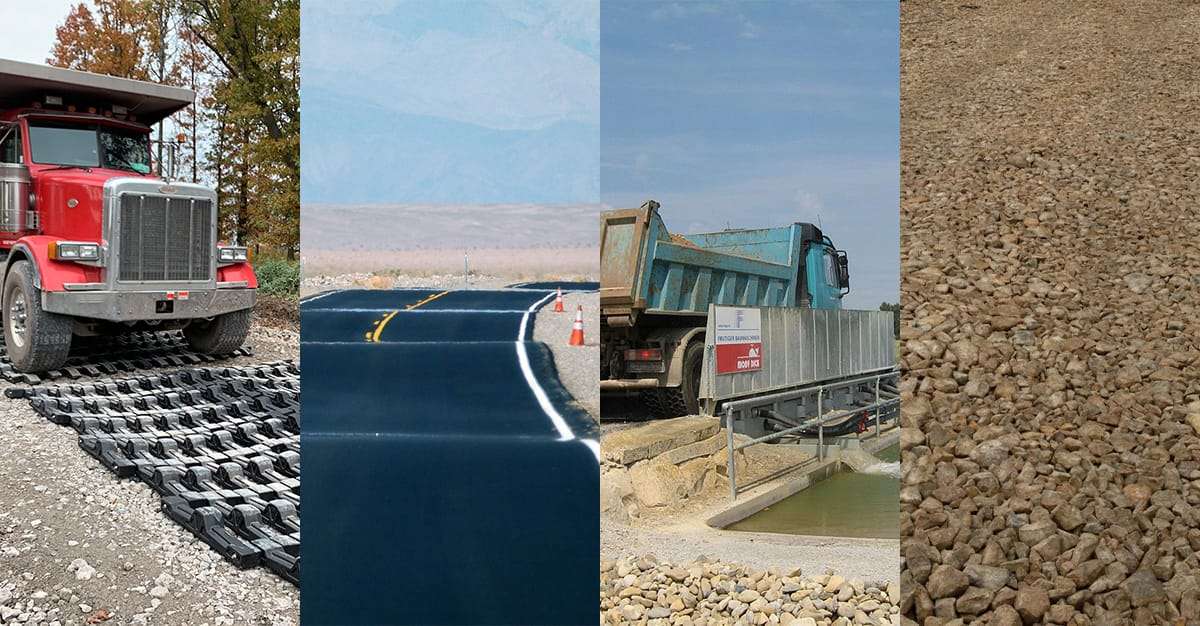
There are four main methods of trackout control you can use, some of which can be combined for even more effective measures. We summarize them below.
Gravel Pads
Gravel pads are the most common stabilized construction entrance method. Often enough when someone mentions a “stabilized construction entrance”, this is exactly what they mean. Gravel pads (or construction entrance rock pads) are essentially a large pit of crushed rock and gravel that lives right in front of the exits for your construction site. The idea is that the gravel and crushed rock lodges itself between your tire grooves to pry out any trackout. Gravel pads work great—at first. However, over time, they tend to lose their effectiveness. Additionally, they can be expensive to maintain and are one-site solutions. This means that you can’t take your gravel pad with you to the next job once the current one’s done. You also have the painful task of cleaning it up before leaving your site.
Wash Pits
Wash pits are a highly effective trackout solution available to construction sites, with a few major drawbacks. Wash pits use pressurized water to blast off any trackout from your construction vehicles. They tend to be very effective at removing trackout, so what’s the catch? One drawback to this type of stabilized construction entrance is how costly they are. Wash pits are a significant investment both upfront and overtime. They also require additional logistics of water access and drainage problems. Not to mention that they are also one-site stabilized construction entrance solutions.
Paving
Perhaps the least effective trackout method of them all is paving. It’s almost unfair to the other methods to include it. Using a stabilized construction entrance on pavement means having a paved road lead from the construction site to the public roads. That’s it. The idea is that all the loose trackout will fall off in this distance. But more often than not, that isn’t the case. There’s a reason the other methods use intense pressure and agitation to loosen the caked-on trackout. Worse yet, paving is an expensive solution that is only good for that one site and requires a fair amount of labor resources to not only install, but also to keep clean, because all that trackout mess has to go somewhere.
Trackout Control Mats
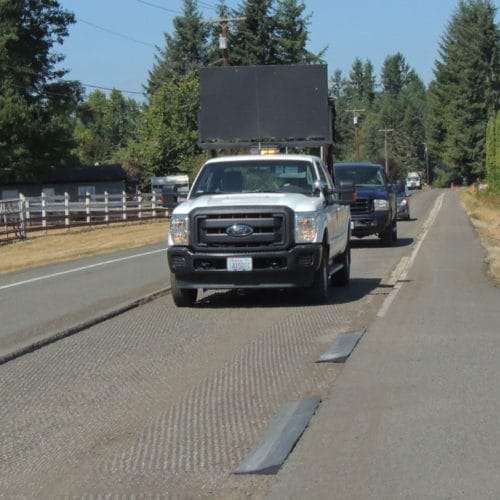
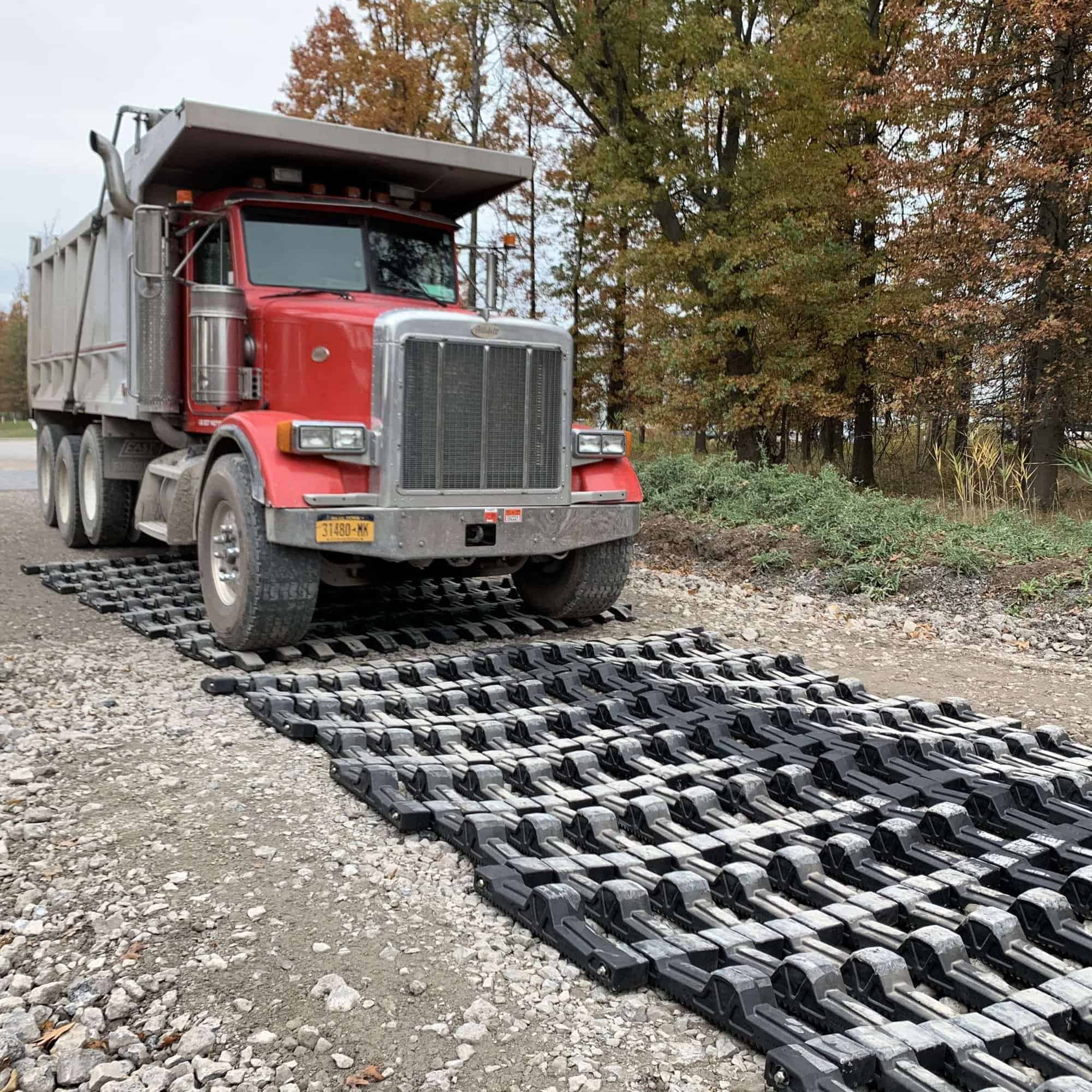
Our personal favorite method of trackout control is the trackout control mat. It’s our favorite, because we make them. Our RubberForm® Trackout Control Mats are composed of a sturdy grid of 100% recycled materials (mostly rubber) that gently rock and vibrate the trackout off your construction vehicle. Though they are flexible (they fold up like an accordion) they’re connected together into one solid mat. This means you won’t need to anchor them down to keep them from being moved around. You also won’t need to bracket or chain them together to make sure they don’t drift apart.
They’re easy to install. You simply lay them down in front of your entrances/exits and as the vehicles drive over them, nearly all the trackout is removed. Our mats are durable, effective, and affordable solutions that can be used over and over again. Additionally, for larger long-term operations, many construction sites are choosing to pair Trackout Control Mats by RubberForm® with stabilized construction entrance methods like wash pits for the ultimate trackout control performance.
How easy are our mats to install?
- Just lift (with a front loader)
- Lay out
- And get to work
- To clean up, just lift and fold it back up
So how do you choose for your construction entrance?
- Gravel pads are cheap on the front end
- But take a lot of maintenance
- And are one-use only
- Wash pits are really effective
- But expensive to setup
- And require a water supply
- Paving doesn’t work well
- (But at least it’s expensive too!)
- Trackout control mats can be a little expensive initially
- But are easy to use
- And can be reused at site after site
When you’re ready to make your trackout control super simple (so you can focus on what you do best), reach out to us at RubberForm® today to learn more. We’re excited to help you figure out your ideal trackout control setup.
Date Published: November 5, 2020