
Key Takeaways
- Each traffic-calming tool (bumps, humps, cushions, tables) serves a different speed-reduction goal – choosing the right one depends on how slow you need vehicles to go.
- Speed bumps provide the strongest slowdown for high-risk areas; speed humps offer gentler control for residential and everyday traffic.
- Cushions allow emergency vehicles to pass smoothly, while speed tables create safer pedestrian crossings.
- Recycled modular bumps and humps install quickly, relocate easily, and last far longer than asphalt or concrete.
- Traditional concrete/asphalt solutions are costly, high-maintenance, and prone to cracking – recycled composites deliver a more durable, sustainable alternative.
Everyone needs traffic calming
Slowing down traffic to keep pedestrians, cyclists, and motorcyclists safe is a constant concern for municipalities, schools, hospitals, universities, industrial and commercial sites, and many other places. The number of options to calm traffic can be overwhelming. There are speed bumps, speed humps, speed cushions, and speed tables to consider. There are also traditional concrete and asphalt methods for permanent installation and, increasingly, recycled material alternatives that can be installed either permanently or temporarily. This guide will review each of your traffic calming options and help you match the right tool to your road safety goal.
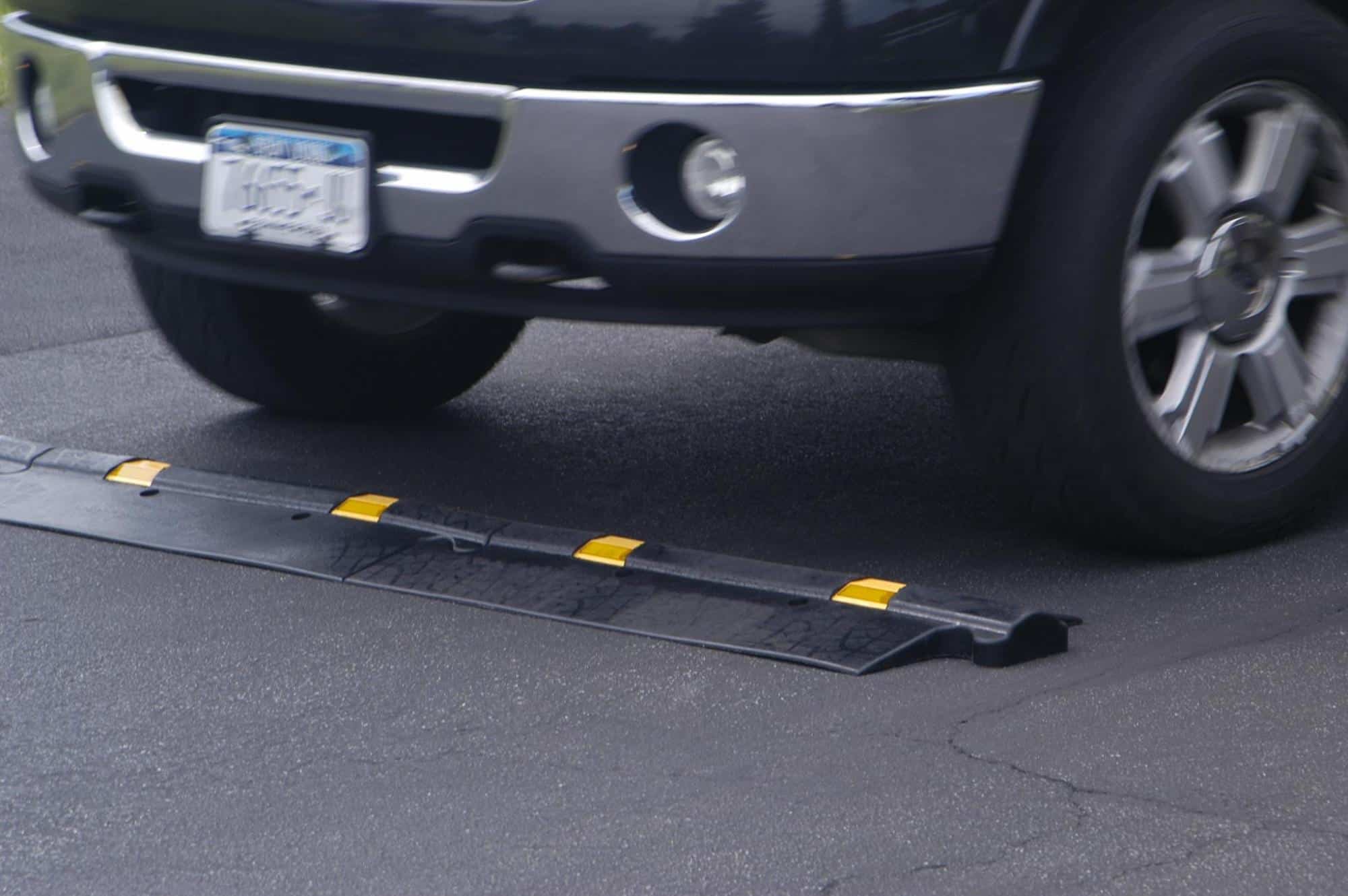
Recycled speed bumps or humps are not only durable and easy to install, but also offer environmental benefits. These modern traffic calming alternatives provide a flexible and effective way to enhance road safety without the high costs and environmental impact of traditional materials such as concrete or asphalt.
Speed Bumps vs. Speed Humps (vs. Cushions or Tables)
Speed bumps, humps, cushions, and tables all calm traffic by forcing vehicles to reduce their speed. But they each have unique advantages and disadvantages that make finding the option best suited for you simple.
Speed bumps are small, raised areas that force drivers to slow down significantly, making them ideal for parking lots, alleys, and private roadways. They tend to reduce speed the most among all the other options, and can be simpler to install.
Speed humps are wider, longer, and gentler. They are designed to reduce vehicle speeds without causing discomfort, making them suitable for road access and residential roads where a moderate speed reduction is needed.
Speed cushions are uniquely designed to slow down standard vehicles while allowing emergency and service vehicles to pass without jarring interruptions. This makes them perfect for use on municipal roadways, including neighborhoods and larger parking lots. They are gentle in speed reduction and disruption similar to speed humps.
Speed tables’ main advantage is that they can reduce speed gently at a crosswalk–pedestrians can cross on the speed table itself.
Traffic calming breakdown
- Bumps – reduce speed by a lot
- Humps – gentler, reduce speed by less
- Cushions – allow emergency vehicles to pass unimpeded
- Tables – allow pedestrians to cross on the table itself
How do you choose?
The primary factor in choosing speed bumps versus speed humps is speed reduction. If you need traffic to flow at a reasonable speed (like 25 mph on a residential street), then speed humps are your best bet. They’ll make it much harder to tear through a neighborhood at an unsafe speed, while still allowing normal traffic to clear at the appropriate speed.
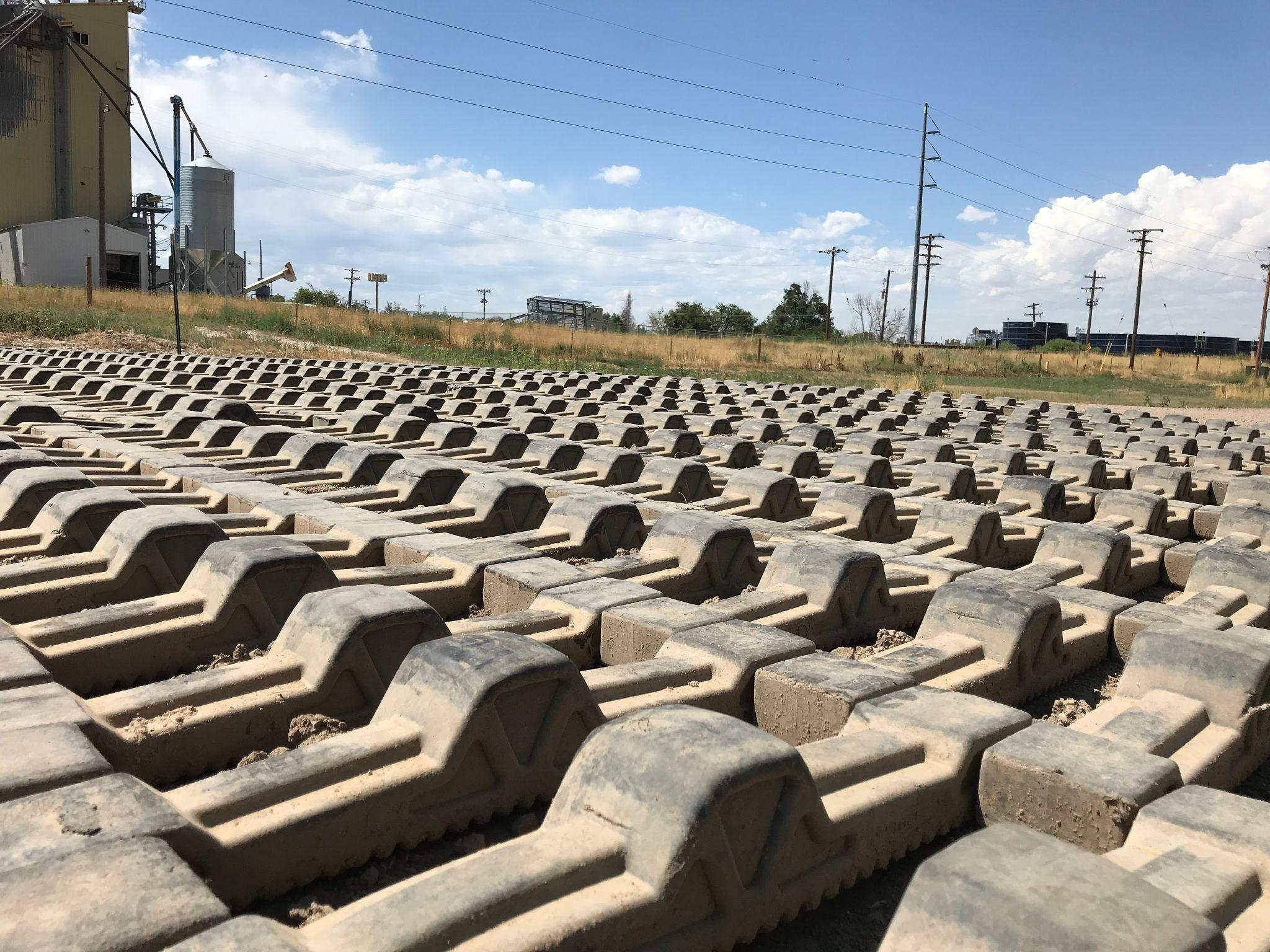
If you need much slower speeds for pedestrian safety, like at a school or park, speed bumps are the way to go. They’ll reduce vehicle speed more aggressively and disruptively to 15 mph or even slower. Our MLSB speed bump can also be deployed temporarily, no anchors required, with each modular unit locking into the next. This means you could lay them down daily for school pickup, for example, and gather them back up afterward in just a couple minutes.
Why not just use asphalt or concrete?
Asphalt and concrete speed bumps or humps are pretty ugly when they’re brand new, and only get uglier over time. They begin to crack and crumble even in the first year, and will require frequent inspection and maintenance to last long at all.
Initial installation is expensive and time consuming. The road or parking lot surface needs to be prepared, the concrete or asphalt poured, then the bumps or humps need to cure before they can be driven over.
Maintenance and repair is expensive too as the concrete or asphalt warps and spells and begins to crack. If left undermaintained, you can’t even remove or replace traditional speed bumps and humps easily. You need to demolish them first, then prepare the surface again before repouring.
Hard concrete and asphalt create additional noise as they’re driven over and are harsher with any vehicle impact, whether bumper or something on the underside of the vehicle.
Traffic calming should be simple
In a world of traffic calming inconvenience, our speed bumps and speed humps are blessedly simple to use. You can install them in minutes and remove them just as easily. Our MLSB speed bumps can even be used without anchors–just lay out the pieces and link them together. This means you can easily relocate our speed bumps or humps as traffic patterns or your needs change. You can also easily take them up every winter to ensure they aren’t damaged by (or do damage to) snowplows.
The recycled composite material we use in our speed bumps and speed humps won’t chip, crack, crumble, or corrode, no matter the heat, cold, extreme weather, or heavy traffic it endures. If you do somehow manage to damage a speed bump or hump, ours are easy to maintain and repair. Our speed bumps and speed humps are fully modular: remove the damaged section and replace it with a fresh one.
How to install our speed bumps and humps:
- Lay out each piece
- Drill anchor holes
- Install anchors
- (To remove, just do the reverse!)
Long-lasting and sustainable
RubberForm speed bumps will last years and years with minimal maintenance and repair. The first installation of a concrete or asphalt speed bump might be cheaper, but when you’ve repaired and replaced one multiple times in just a few years, the costs add up.
Every concrete or asphalt speed bump is destined to be demolished and the rubble thrown away in some dump. Our speed bumps and humps are made of material our suppliers saved from being dumped. And we source all our recycled materials domestically, so every recycled speed bump or hump you use is cleaning up our shared American backyard.
Simplify your traffic safety
Traffic calming is a pain. But it doesn’t have to be. It can be simple. By understanding how speed bumps, humps, cushions, and tables function, you can make the best choice for your business or municipality. RubberForm Speed Bumps and Speed Humps are a rugged, easy-to-use, maintainable, movable, long-lasting solution to your traffic calming dilemma. And remember that every bump or hump you use is cleaning up America’s backyard by keeping waste out of landfills. When you’re ready to get safer streets the simplest way possible, give us a call or request a quote. We’d love to help.
Date Published: December 5, 2024