

If you’ve got any liquids on your property that would cause problems if spilled, you might need spill containment. This goes for anything from actual hazardous chemicals to untreated water.
Once you know that you need spill containment, your next big question is: how much spill kit capacity do I need?
The official EPA/OSHA formula might seem complicated at first, but it really isn’t. And RubberForm® is here to walk you all the way through it in the simplest way possible.
In this article, we’ll discuss the following key spill containment takeaways:
- Secondary spill containment is your facility’s backup plan for leaks and spills
- Calculating the right containment capacity is simple
- Turnkey spill containment saves time and headaches
- Durable, reconfigurable spill berms are a long-term investment
What is secondary spill containment?
Generally speaking, you only need secondary spill containment like a spill berm when you already have primary spill containment: the drums, tanks, or vats that store the liquids you need to contain.
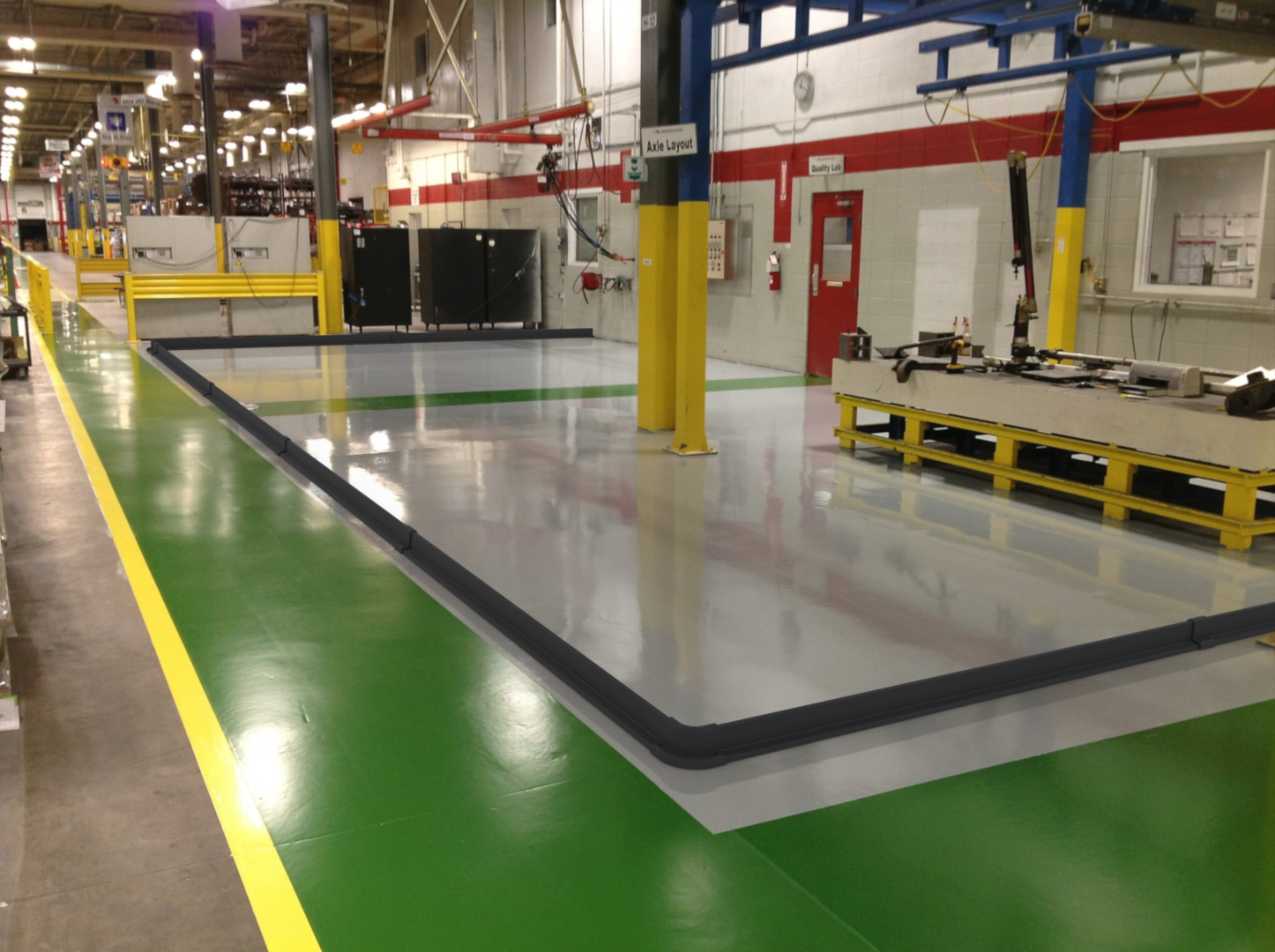
If one of those primary containers fails or springs a leak, you need a fallback system to contain the spill. That’s where a solid spill berm comes in.
The traditional spill berm was some combination of angle iron and poured concrete. They were a hassle to design and build, and in a few years the iron would rust and the concrete crack and crumble.
Modern spill berms are often made from rubber, plastic, cloth, or a combination. They’re more flexible and easier to install, but they’re not all made equal. More on that later!
How do I find my spill containment volume requirements?
The EPA spill containment guidelines are pretty straightforward for how to calculate the spill volume capacity you need. Basically, you need to calculate two figures:
- 110% of the volume of the largest liquid container you have in the facility
- 10% of the total volume of all the containers you have in the facility
Whichever number is larger is the minimum spill containment volume you need to build to be up to code.
What happens if you’re not up to code? Fines and possible legal liability for any spills. Not something you or your business wants to deal with.
The nice thing about spill volume is that you can increase it two ways: have the berm cover a larger area of your facility floor, or make the berm walls higher. A 4-in berm will contain double the volume of a 2-in berm enclosing the same area. That’s why RubberForm® offers 2/4/6/8 inch berms to fit any secondary containment requirements you have.
How do I get started designing my spill containment berm?
Do the EPA calculation and measure the area of your facility where the berm needs to go. Send that to the RubberForm® team and we’ll design a spill containment solution that fits your facility perfectly. We’ll send back a CAD drawing for your approval.
Then, we extrude all the berm lengths you’ll need, cut and fabricate to perfectly fit the design. That means when your order arrives, all you need to do is install it. No further cutting or fabricating is required.
RubberForm®’s complete turnkey spill berm solution:
- You measure
- We design & fabricate
- We ship to your door
- You install
Why not just use a DIY spill berm?
A lot of folks are hocking DIY spill berm kits nowadays. They’re usually made from some combination of plastic, rubber, and cloth. The cheapest sorts are easy to deform and not liable to last very long.
All of those DIY kits require you to design and make all the cuts yourself. Corners need to meet exactly at identical angles to properly seal. If you make a mistake, you need to cut again. And if you run out of berm (from making mistakes), you need to order more.
You’ve got better things to do than mess around with a DIY berm.
The most innovative spill containment berm
We extrude all our spill berms ourselves. And our extrusion length is only limited by what we can ship. So if you need a really long single run of spill berm, just give us a call. We can probably do it.
We use a special recycled rubber and plastic composite material in our berms that won’t chip, crack, crumble, or corrode, no matter the heat, cold, or heavy use you put it to.
All our berms use a two-step process for the best possible seal: we use both a liquid-tight adhesive and lag bolts to create an impenetrable barrier to leaking liquids. Even then, if you ever have to reconfigure your spill berm, it’s a lot easier to remove our berm than it would be to demolish and clean up the mess a traditional concrete berm leaves behind.
The best spill containment decision you’ll make
When you’re ready to pass on aging concrete berms or cheapo DIY solutions, give us a call. We’ll walk you through the whole process and get you the simplest turnkey spill containment solution on the planet.
Date Published: July 17, 2026