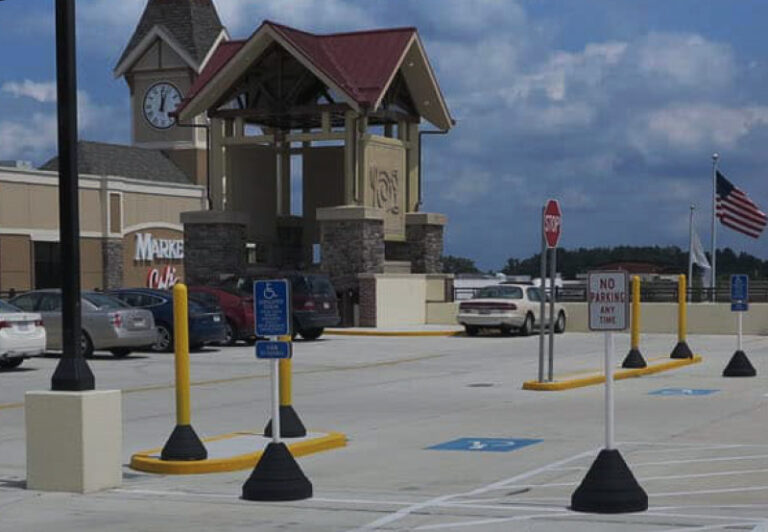

If you’re looking to learn about the different types of speed bumps, that means you need aggressive traffic calming on your roads or parking lots.
“Aggressive” means slowing traffic down under 10 mph or even under 5 mph. It’s perfect for places where pedestrians and vehicles often cross paths like pick-up/drop-off areas, parks, and crowded parking lots.
It used to be you only had two speed bump options: poured concrete or asphalt. But thankfully, that’s no longer the case. In this article, we’ll explore the following main takeaways:
- Speed bumps provide traffic calming that drivers can’t ignore
- Concrete and asphalt bumps are costly to install, maintain, and replace
- Recycled composite speed bumps are durable, portable, and maintainable
- Different speed bump designs solve different traffic calming challenges
Why not just use stop signs and speed limits?
Most people stop or at least slow down for stop signs and stop lights. Most people slow down a tad for speed limits, particularly low ones like you see in school zones. So why aren’t they enough?
A physical impediment like a speed bump is the only traffic calming method that cannot be ignored. If you hit a bump at high speed, you will likely both damage your vehicle and lose control of it. You can drive right by a stop sign, never stop or even slow down, and suffer no consequences at the time. Of course, there are likely to be horrible consequences eventually.
What’s wrong with concrete and asphalt types of speed bumps?
The traditional speed bump has three big disadvantages: they’re a pain to install, a pain to maintain, and they’re just so ugly.
To install concrete or asphalt speed bumps, you need a big work crew, some heavy equipment, and you’ll need to close the road or parking lot in question for several days.
You need to do a little excavation of the work area first, because if you pour directly on the road the bump will break off from it faster than you’d believe possible. Then you pour in the concrete or asphalt mixture. You shape it, then need to wait while it cures.
When all that’s done, you’ve got an ugly lump in the middle of the road. At least it will calm traffic. But before long it will start chipping and cracking from the heat, cold, rain, ice, snow, and of course, all the traffic going over it. If you don’t mend it constantly, within a few years you’ll need to replace it.
And to replace any concrete or asphalt bump, you’ll need to demolish the existing one and excavate the space for the new one again. It’s a real bear.
Are there other speed bump options?
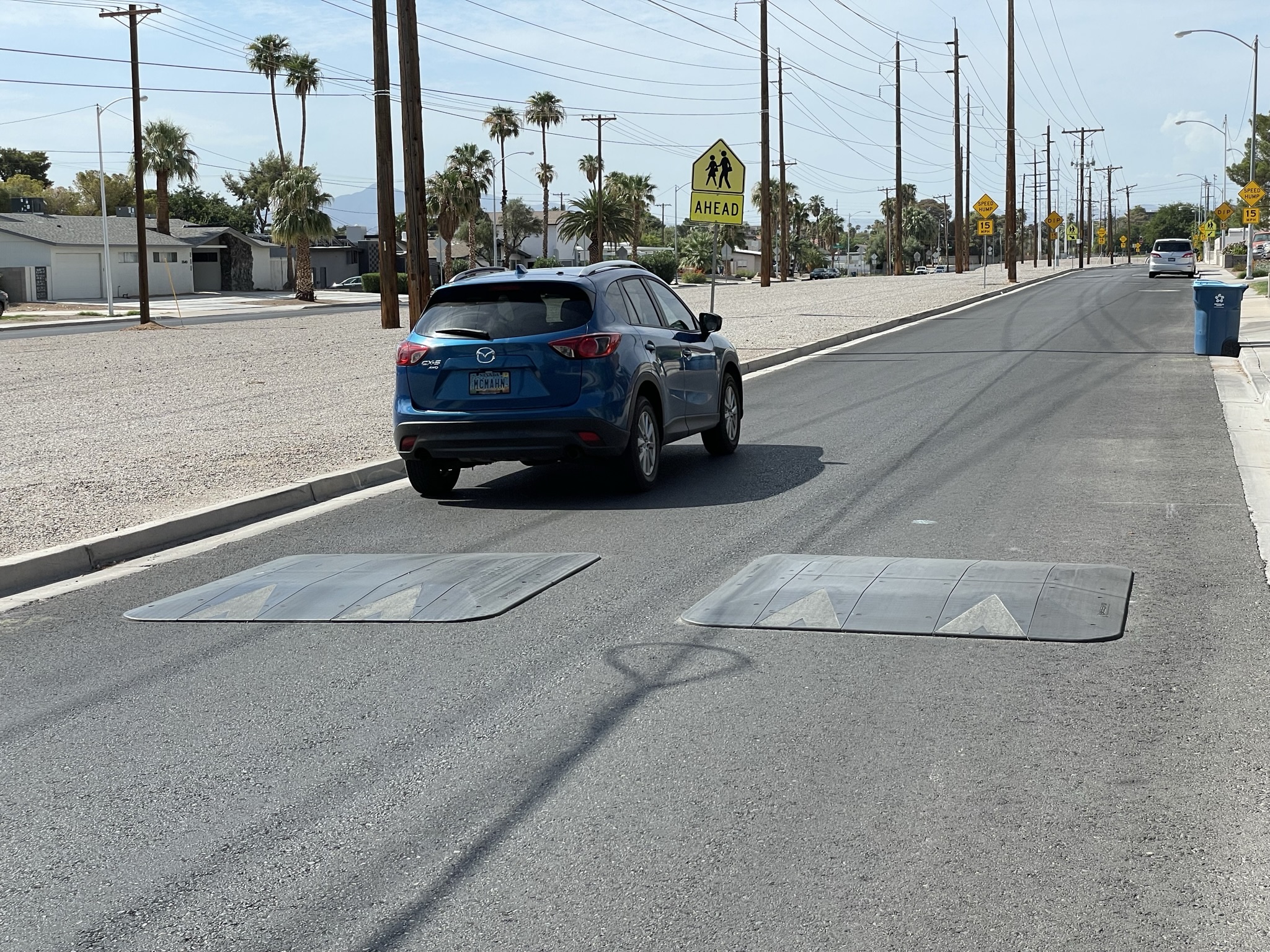
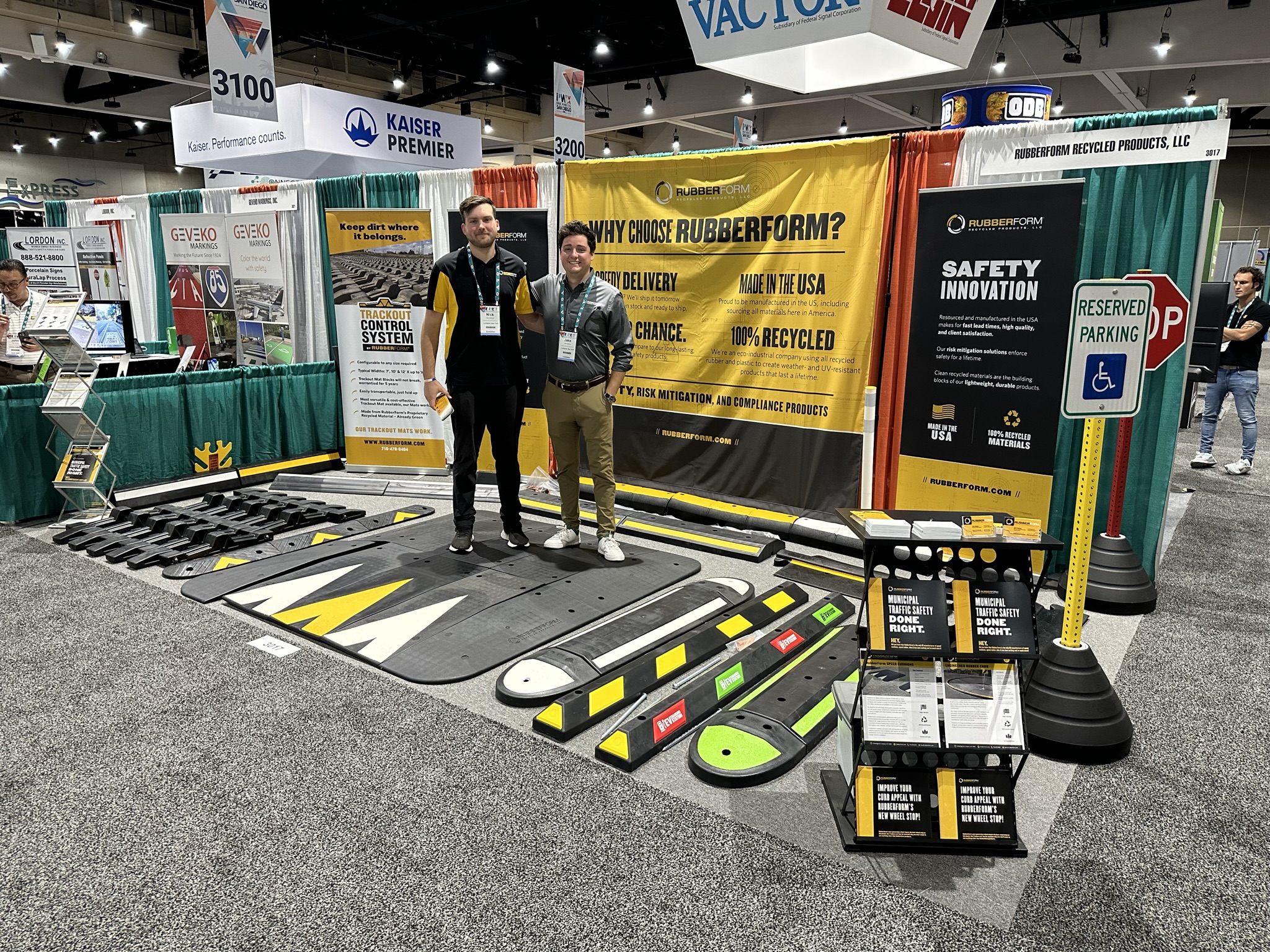
There sure are. RubberForm® 100% recycled rubber and plastic composite speed bumps look nicer, last longer, and are blessedly convenient to use.
If you’re looking for a traditional speed bump you can install permanently on a road or parking lot, take a look at our SB-10 speed bump.
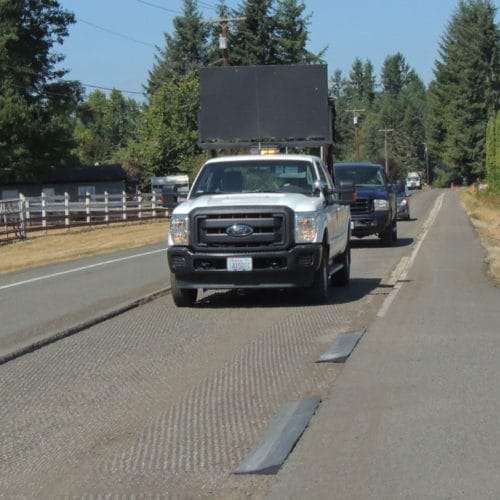
It’s modular to span any width of road or lot. It installs easily, without heavy equipment, large crews, or road closures. The rubber/plastic composite we use is tough, so it won’t chip, crack, crumble, or corrode under searing heat, freezing cold, or heavy use.
If you need to remove it and relocate somewhere else in the future, that’s just as simple as the initial install. In fact, many municipalities remove our speed bumps every winter for their snowplows, store them, and install them again in the spring.
What if I need portable speed bumps?
You need to look at our 2.5” or 3” MLSB series of speed bumps. While you can install them to be just as permanent as our SB-10s, the real magic happens when you need to use them in a quick-deploy capacity. A single worker can deploy a series of MLSB speed bumps in just a few minutes. A team could probably do it in seconds with a bit of practice.
You just lay them down on the ground, line up the dovetail connections, and…that’s it. You’ve got an effective temporary speed bump. Our MLSBs are perfect for special events and limited drop-off/pick-up times like you’d have at a school.
They’re magnificently light to boot, meaning one worker could carry the pile of pieces for a road-width MLSB by themselves with ease.
What if I have a dirt road?
Our MLSB speed bumps work great on dirt roads too. You can just lay them down and use the dovetails in a temporary capacity. But what if you want something more permanent?
We developed a dirt road version of our MLSB that uses a special earth anchor to permanently attach to gravel and dirt. It’s perfect for farms or other rural businesses that need to control vehicle speed in work areas and reduce the dust kicked up by vehicles racing down their country lanes.
7 things all RubberForm® Speed bumps have in common:
- 100% recycled materials
- 100% American-made and American-sourced
- No cracking, crumbling, warping, or spalling
- Easy to install, remove, and relocate
- No heavy machinery
- No large crews
- No road closures
How do I get started?
Whether you need permanent traffic calming with easy installation, or quick-deploy temporary speed bumps, or even traffic calming devices for dirt or gravel roads, we’ve got the perfect options for you. When you’re done with all the hassle of heavy construction and concrete or asphalt speed bumps, give us a call.
Date Published: July 17, 2026