

Nobody likes to plan for the worst. It’d be easier just to hope you never have a dangerous spill in your facility. That’s probably partly why the EPA has mandatory requirements for spill containment. But they can get a little complicated. And that’s not where the difficulty ends. Even if you can figure out how much spill containment you need, cutting and fabricating the spill berms can be a huge pain. That’s why we’re here to simplify your spill containment solution with a one-stop guide on everything you need to know.
In this article, we will review the following key takeaways:
- Spill containment is essential for environmental protection, worker safety, and EPA compliance
- Proper sizing ensures your containment system meets regulatory requirements
- Traditional containment methods are often difficult to maintain and adapt
- Pre-fabricated spill containment berms simplify installation while providing long-term durability
Why do I need spill containment equipment?
Because the law says you do, and you’ll get fined if you don’t.
That’s the easy answer. But the law isn’t wrong here. Spills can be bad in lots of ways.
The risk of spilling hazardous chemicals is obvious. You don’t want something toxic getting on your workers or leaching into the ground and ultimately ending up in the local water system.
But even nontoxic liquids may need to be contained. Water that’s just dirty probably won’t kill you, but you don’t want to just go dumping it anywhere. Any kind of liquid can damage floors, walls, and machinery if it leaks onto it. The cracks in an old basement can attest to that.
What kind of spill containment plan do I need?
Lucky for you, spill containment regulations from the EPA are pretty straightforward. To see how large of a containment space you need (height of containment wall and total area will tell you what volume of liquid it can contain), you need to measure two things:
- 110% of the volume of the largest liquid container you have in the facility
- 10% of the total volume of all the containers you have in the facility
Whichever is greater is the minimum volume you need to be able to contain. Now that you know what you are legally required to contain, you need to choose how to contain it.
What spill containment method should I use?
Traditional methods of spill containment typically involve poured concrete or angle iron adhered to the floor. The concrete cracks and crumbles over time, and the iron rusts and warps. Both methods are permanent installations that require some level of demolition to remove in the future. If your spill containment needs change, rearranging is expensive and time-consuming. The one positive thing you can say about them is that they do contain spills, at least until they warp or crack.
A newer method uses some cheap, flexible combination of foam, plastic, or cloth to create DIY spill berms. You typically have to do all the cutting and fabrication yourself, so I hope you or your team are really good at cutting those 45 degree angles perfectly. If the corners aren’t snug, your berm will leak.
Flexible berms make installation easy, but way too often, flexible means flimsy. The berm will deform and warp over time until it is useless. Cross your fingers it will last another year before you have to remove it and install a new berm.
What’s unique about RubberForm® spill containment solutions?
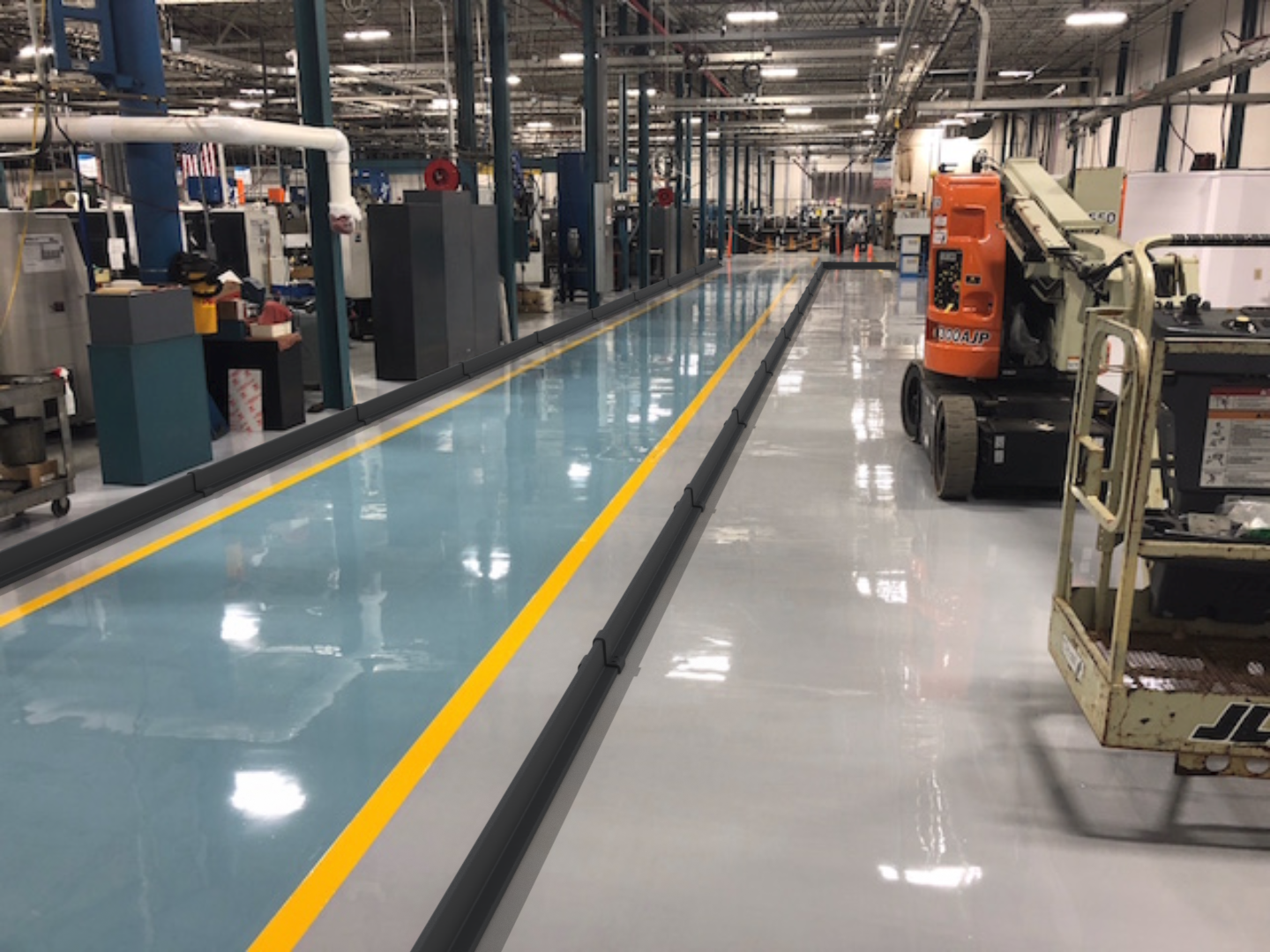
Our RubberForm® Spill Contain Berms are made from 100% recycled TPV. This means they’re tough and long-lasting. They won’t chip, crack, crumble, or corrode. But they’re also lightweight and flexible, which means they’re easier to install and can conform to any smooth floor surface.
Our spill berm is a 100% turnkey solution. All you need to do is measure the area you need for spill containment and send it to us. We’ll send back a detailed drawing of the exact height and layout of spill berms you need to properly contain spills.
After you sign off on the plan, we’ll manufacture all the lengths of berm you need, then cut and fabricate it to your precise specifications. That means that when your spill berm arrives, you won’t need to cut or measure a single piece. Just apply adhesive, lay the pieces down, and drill holes for final bolting.
It’s the easiest way to get long-lasting spill containment.
3 simple steps to spill containment:
- You measure
- We design & fabricate
- You install
You won’t need any tools more complicated than a tape measure, drill, a caulk gun, and a few other things you probably already have.
What’s my next step?
If your facility has any kind of liquid, dangerous or not, that would be a problem if it spills, you need spill containment. Look at the EPA regulations to figure out how much spill containment you actually need. Then, when you decide you’re done relying on poured concrete, angle iron, or bargain basement cloth and foam spill berms, give us a call. Our 100% American-made and American-sourced spill containment berms are waiting.
RubberForm® Spill Berm Facts:
- 100% recycled TPV rubberized plastic
- Made, designed, and fabricated at our Lockport, NY factory
- Available in 2”, 4”, 6”, and 8” heights
- Extruded in 8’ lengths, but can custom extrude longer if needed
Date Published: July 17, 2026