

Trackout Mats vs. Rock Construction Entrances
Governmental fines, environmental lawsuits, and other legal liabilities can take your recently-finished construction job from the win to the loss column. Don’t let that happen!
No contractor wants to spend any of their precious money, time, or effort on trackout control methods. Construction is your focus, after all. But effective trackout control doesn’t have to be a pain. Construction safety can be simple.
In this article, we will walk through the following key takeaways:
- Trackout control is eco- and wallet-friendly
- The rock-based trackout method is overly labor-intensive
- Trackout mats simplify everything: installation, cleanup, and reuse
- RubberForm® tracking pads are long-lasting and tough
What is trackout and why should I care?
When large vehicles leave your construction site, their tires are often caked in dirt, mud, debris, and oils. All that mess will be tracked out onto public roads, and ultimately, public water systems unless you do something to stop it.
You might be concerned about trackout and erosion control simply from a desire to be a good neighbor. But ignoring it can seriously damage your own bottom line through fines for tracking dirt and debris onto public roads, and more importantly, into public water systems.
How do I prevent trackout?
The traditional method of trackout control is a rock construction entrance, also known as a stabilized construction entrance. This is a system that uses stone or gravel, laid out in a large mat, to agitate the tires of exiting construction vehicles and remove excess dirt and debris prior to leaving the job site.
The EPA recommends a depth of at least six inches of gravel or stone, so most traditional stabilized construction entrances require some excavation first. Then a filter cloth is laid down, both to protect the underlying soil below and to contain the gravel and debris above it.
You’ll need to haul in the stone or gravel to fill it initially and maintain additional stock for refilling. The stone will get compacted down over time, so it needs to be manually turned over periodically. It will also need to be replenished as the gravel spills out or gets carried off in vehicle tires.
When your work is done, you’ll need to clean up all the spilled gravel and stone as well as what’s left in the pad, take up the filter cloth, and fill in the space you excavated. It’s a lot of work, and you can’t necessarily reuse much between sites.
A Trackout Mat vs. Rock Construction Entrance
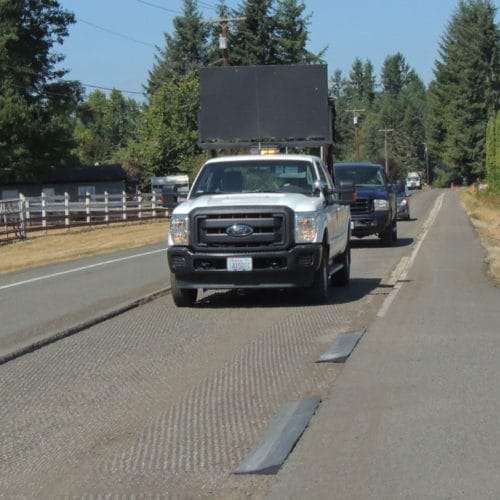
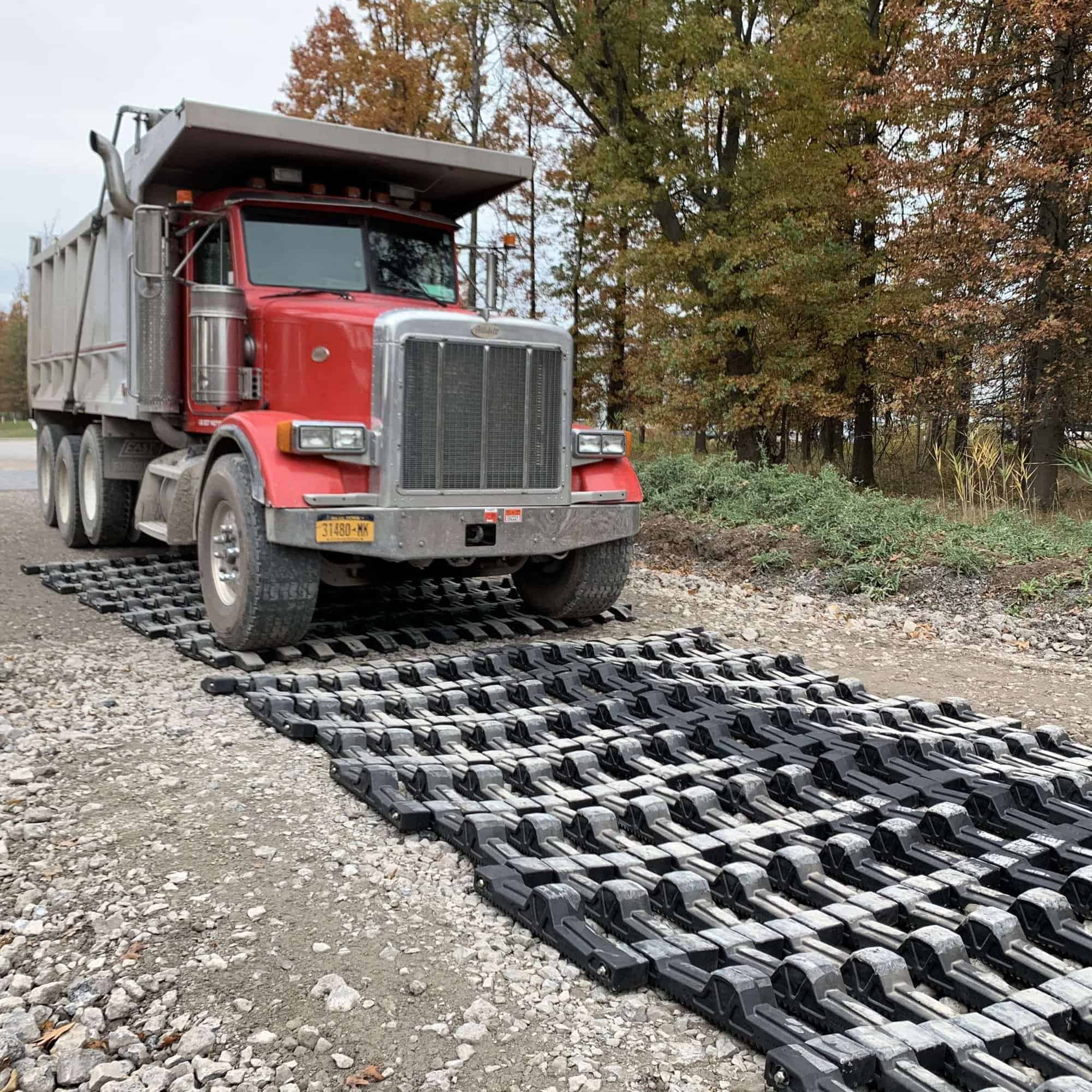
A rubber or plastic trackout mat (or tracking pad) is an alternative to all the additional work a traditional stabilized construction entrance requires. These mats are generally flexible, but connected together in one unit. You lay down multiple mats together to cover a whole construction entrance. Some types of mat need chains, anchors, or brackets to stay in place.
Tracking pads have some sort of angular “teeth” that agitate the tires of vehicles driving over them (just like the gravel pad) and shake off excess dirt, mud, and debris. Depending on the type of mat, you may need special brushes or shovels to clean out the mat as it gets caked over with mud and dirt.
Most tracking pads need no excavation and require comparatively little cleanup when you’re wrapping up the job site.
Everyday Innovation Makes Your Job Easier
At RubberForm®, we’ve innovated and iterated our trackout control mat design over and over again to create the toughest, simplest trackout mat on the planet.
We start with a 100% recycled composite rubber and plastic material that is strong but flexible. The blocks in our mats won’t chip, crack, crumble, or corrode in any heat, cold, rain, ice, or snow.
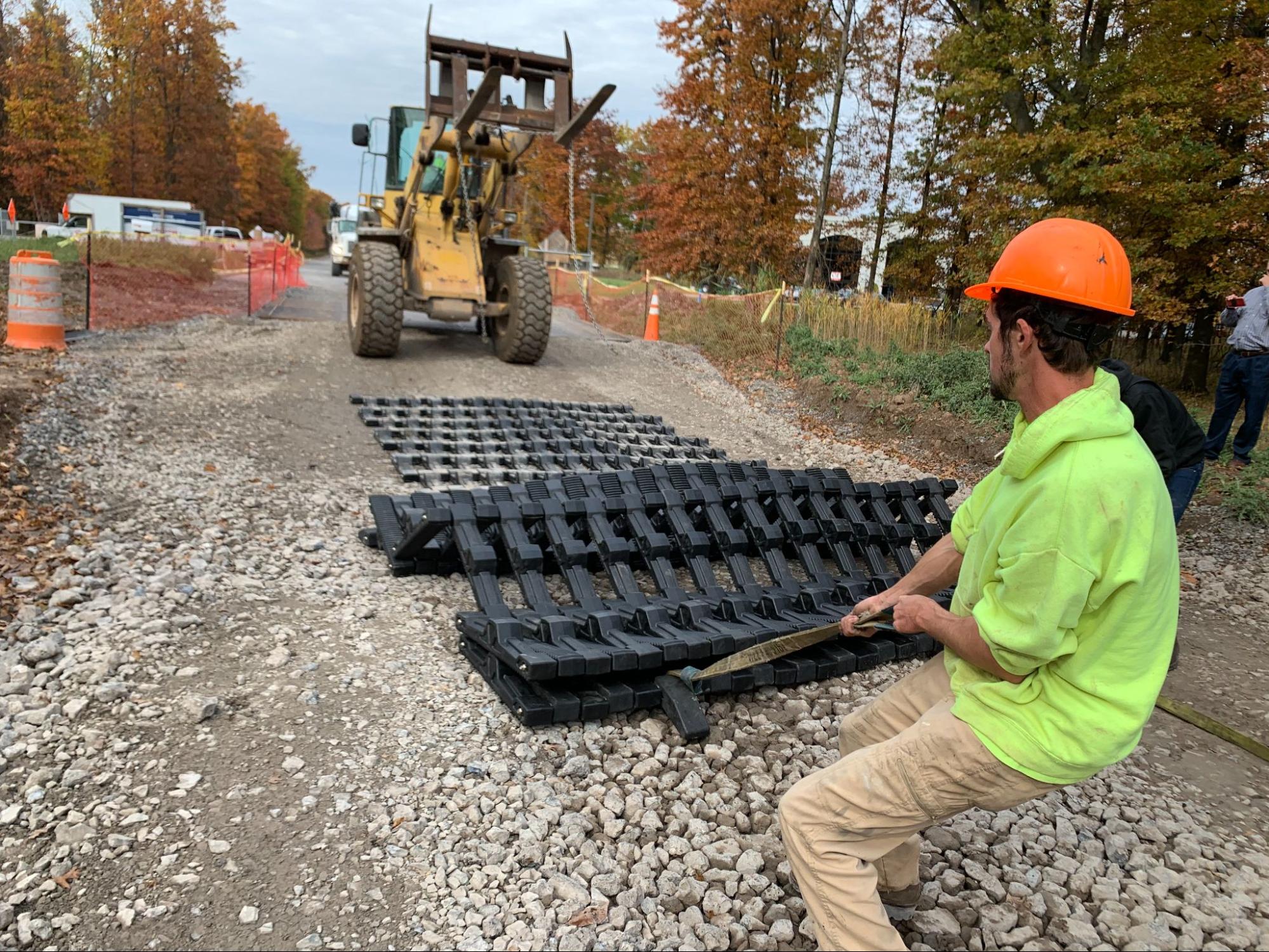
Our mat folds up into a conveniently compact z-fold shape for storage and transport. To install it, you simply lift the mat with a front loader, lay it out, then get to work. No digging, no anchors, no brackets needed.
As the mat gets compacted down and caked with mud, you can just lift it again, shake it out, and lay it back down. When you’re ready to pack up your job site, fold the mat back into its z-fold shape and store till you need it again.
RubberForm® tracking pad installation:
- Lift
- Lay out
- Get to work
Which trackout system is right for you?
A stone or gravel pad is probably cheaper the very first time you use it. But the cost in reconstructing the entire thing from scratch at every site as well as maintaining it throughout the job will add up fast.
A rubber or plastic trackout mat is a massive time-saver in comparison. Our RubberForm® Trackout Control Mat is also a money-saver over time, because you’ll use the same mat over and over again at job after job. When you’re ready to simplify your trackout control setup, give us a call. We’d love to help.
Date Published: May 20, 2026