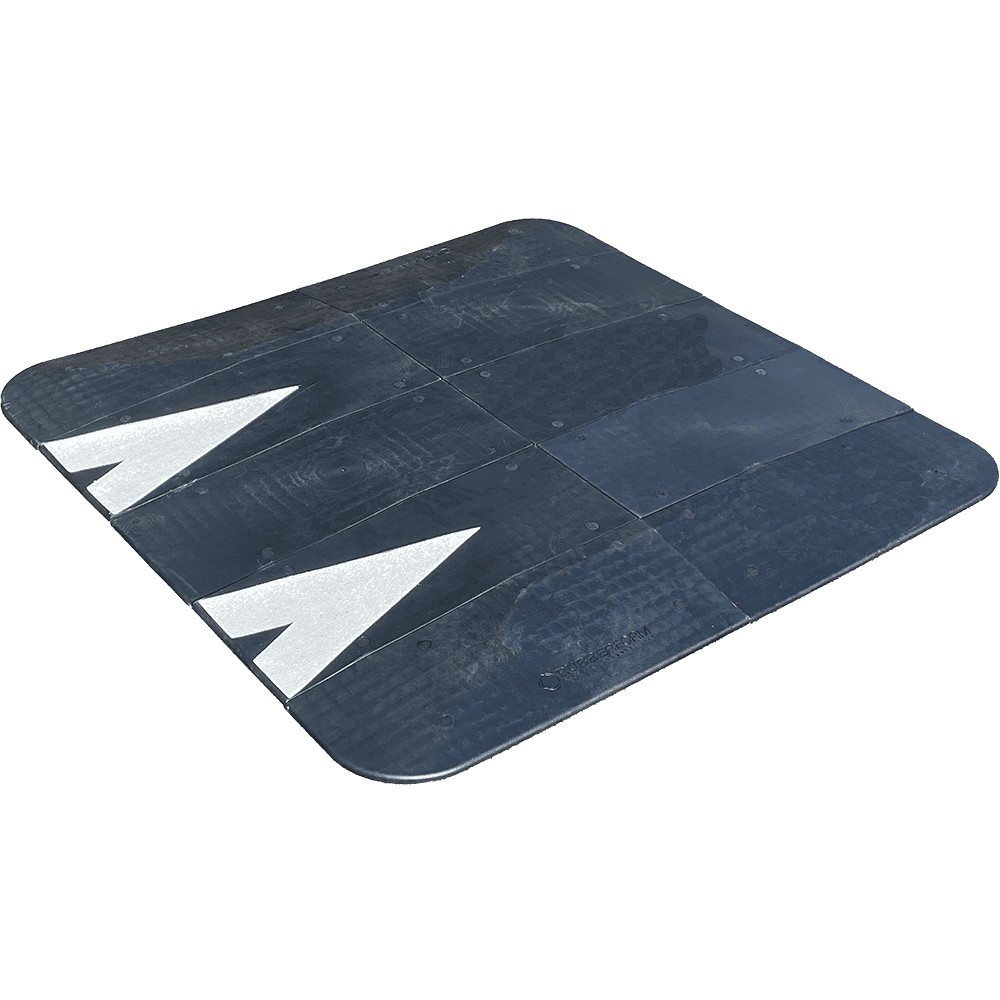

Most folks have never heard of speed cushions. Even if they’ve driven over one in person, it just looks like a weird little speed hump. So why are cities all over America installing them in greater and greater numbers?
For decades and decades, the tools in a municipality’s traffic calming toolbox have been the same: speed bumps, speed humps, traffic lights, speed limit enforcement. Maybe a really fancy urban planner would use chicanes to naturally calm traffic speed here or there.
Then speed cushions arrived in the 1990s. They were more popular in Europe and Canada than here, initially. Only in the past decade have US cities begun to really appreciate their advantages.
In this article, we’ll discuss the following key takeaways:
- Speed cushions are growing in popularity because of their unique abilities
- Physical traffic calming tools are more reliable than signs or enforcement
- Different traffic calming devices serve different purposes
- Speed cushions allow emergency vehicles to pass unimpeded
What is traffic calming?
Traffic calming means slowing down the average speed of vehicles in a particular area. It’s an important component of overall traffic safety and flow in a big city. A number of devices and systems work together to calm traffic throughout a city.
Traffic lights and stop signs are one method of traffic calming, particularly when they are placed close together. It is difficult for vehicles to accelerate too high between stops, so the overall speed of vehicles is kept down.
Speed limit signage and enforcement is another method. Signs are passive of course, meaning they can be ignored by drivers. Generally though, they do slow down the average traffic speed. Police, camera, and radar enforcement of the posted speed limits helps calm traffic even more by ensuring more drivers slow down to avoid citations and fines.
The most reliable traffic calming method is a physical one: speed bumps, speed humps, speed tables, and of course, speed cushions. These traffic calming tools work by providing a physical impediment that forces a driver to slow down their vehicle. Hitting a physical impediment at speed can damage the vehicle or cause the driver to lose control (or both).
Bottom line? Folks can sneak through red lights and stop signs, ignore speed limits and avoid police enforcement. They can’t avoid physical traffic calming tools like speed cushions, though.
How do speed cushions work?
All physical traffic calming devices work by forcing a vehicle to mount and dismount an inclined surface, which can only be safely navigated at lower speeds.
- Speed bumps are shorter and steeper, meaning they have a very large speed reduction. They’re particularly useful for pedestrian heavy areas like parking lots and parks.
- Speed humps are longer and gentler with a smaller corresponding speed reduction. They’re ideal for neighborhoods and other roads where you want traffic to flow smoothly, but not deadly fast.
- Speed tables tend to span the full width of a road and are wide enough to allow pedestrians to cross safely, elevated for maximum visibility.
- The speed cushion is unique among all the other options in allowing wider emergency vehicles to pass by unimpeded.
Why use a speed cushion?
There are three vehicles that always create concern about new speed bumps or speed humps: buses, fire engines, and ambulances. All three need to get where they’re going quickly (or at least on time in the case of buses). And all three tend to be built a good bit wider than the average passenger car.
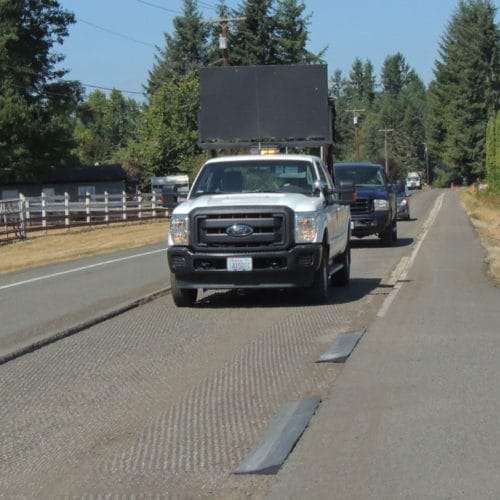
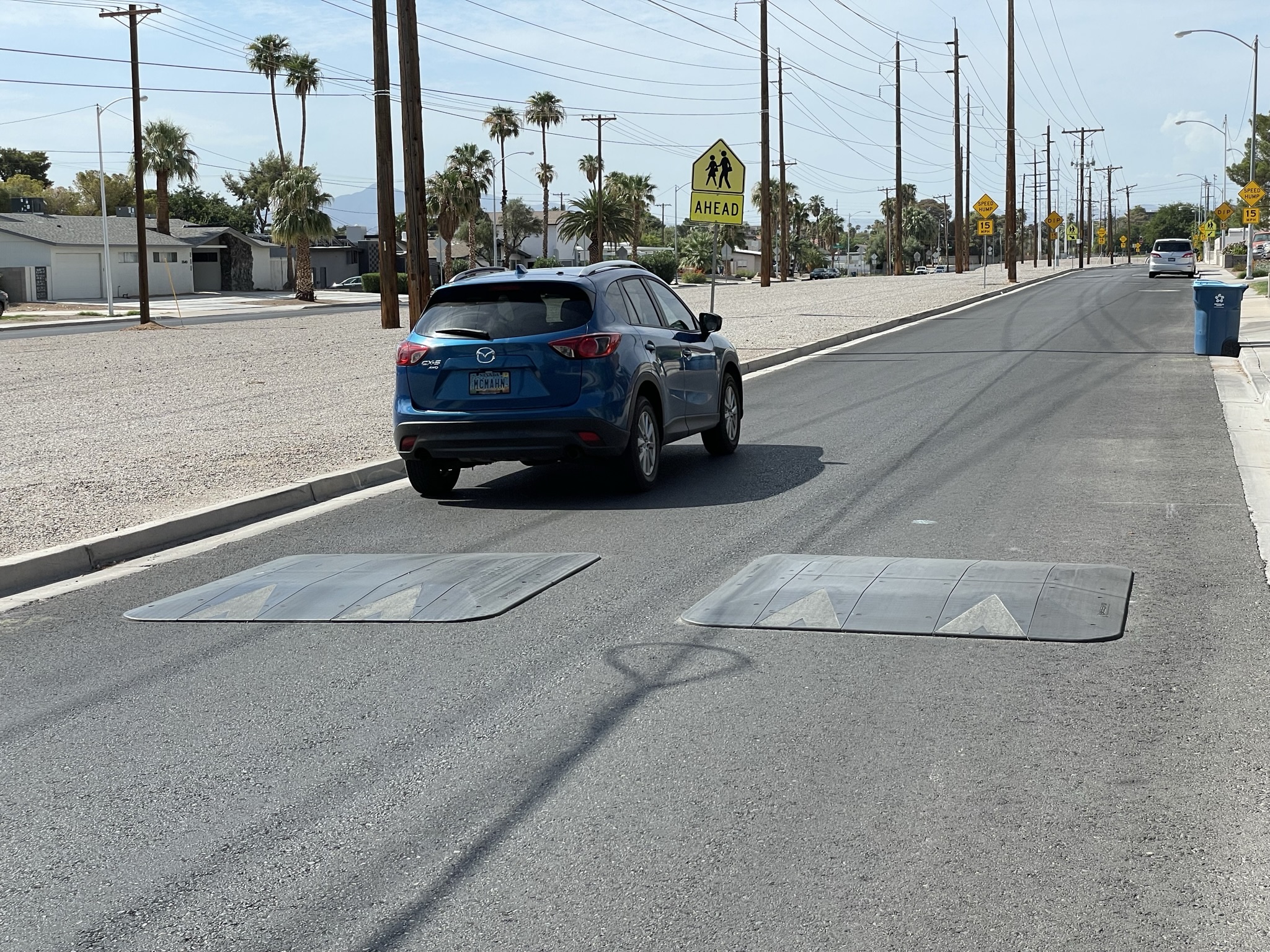
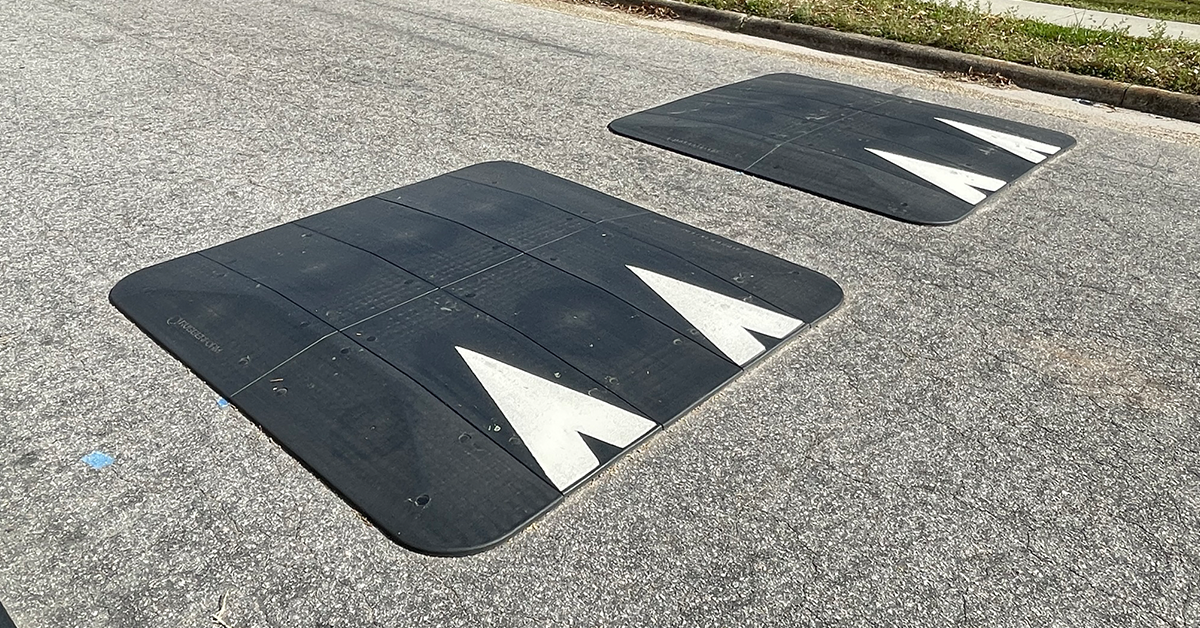
A speed cushion is a lot like a long speed hump or speed table, but with gaps on either side. A passenger car is too narrow to straddle the cushion, so it will have to cross it with one or both sets of wheels. Either way, it slows down. A wide emergency vehicle or bus, on the other hand, can straddle the cushion and safely pass it unimpeded.
This means that a municipality can calm all regular traffic on a major thoroughfare without slowing down their emergency response vehicles. It also means hospitals can now safely slow down passenger vehicles passing through their roads and parking lots without hindering their ambulances.
For cities that formerly had to choose between emergency response and traffic calming, it means they can now choose both.
What makes the RubberForm® speed cushion different?
Originally, speed cushions were made from the same stuff roads were: asphalt or concrete. This meant they required large crews and heavy machinery to install. They crumbled and cracked in the heat and the cold and the heavy traffic (just like the rest of the road). And when they decayed enough to require replacement, you had to demolish them first before you could install new ones.
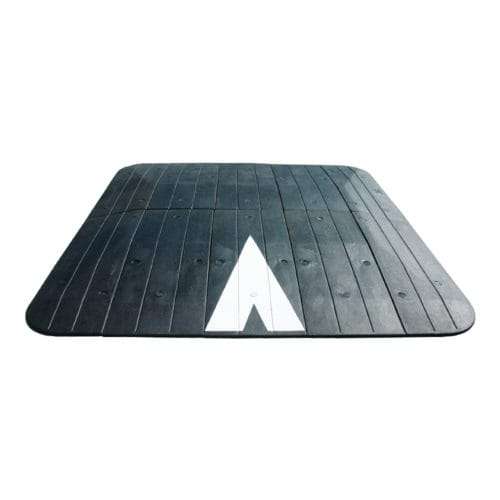
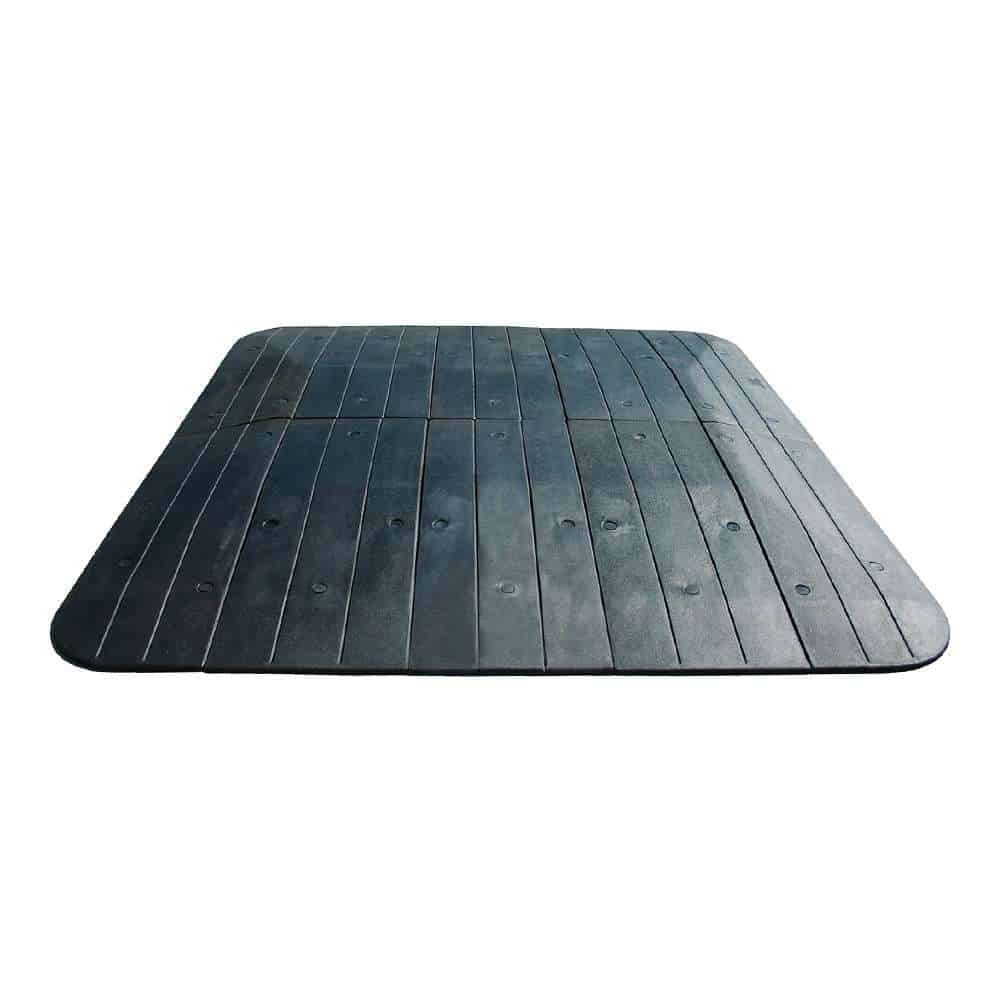
We engineered our RubberForm® Speed Cushions better. They’re made from a special light-but-strong recycled rubber and plastic composite material. It won’t chip, crack, crumble, or corrode in any heat, cold, or heavy traffic.
Our speed cushions are easy to install. You won’t need a big crew or heavy equipment. You won’t even need to close the road. A small crew can lay down a row of speed cushions in an hour or two. In fact, it’s so easy to install and remove that many municipalities remove their cushions every winter so their snowplows can pass unimpeded.
4 things you won’t need when you install RubberForm® Speed Cushions:
- Large work crew
- Expensive, heavy machinery
- Long, annoying road closures
- Do it all again in a few years when the speed cushion cracks and crumbles
What’s next?
If your city has debated physical traffic calming tools like speed bumps and speed humps, but always decided against it because of your emergency vehicles, you should take a look at speed cushions. They’re a convenient and easy way to gently calm traffic without affecting your emergency response capabilities. When you’re ready for the most convenient speed cushions ever designed, give us a call.
Date Published: May 20, 2026