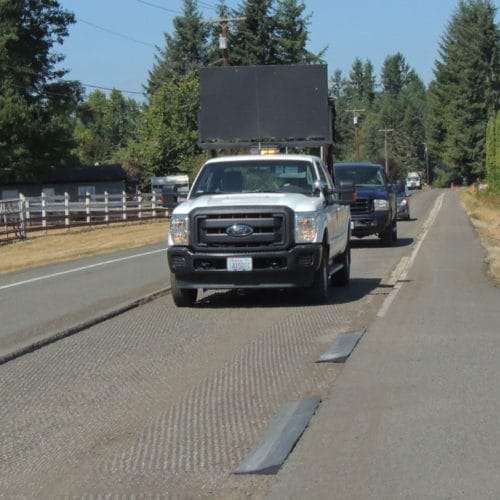

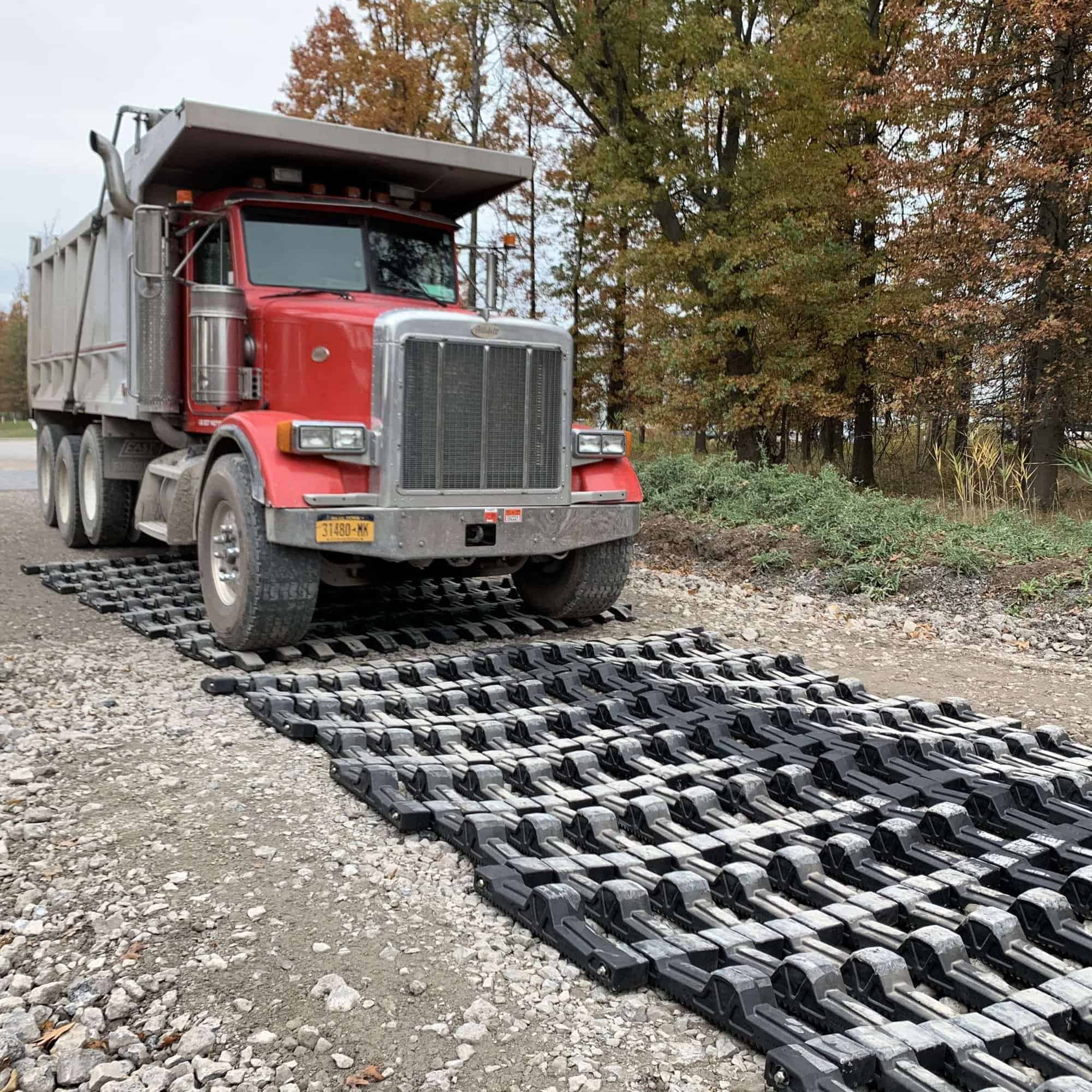

Trackout control is a big enough problem for any construction site–trying to keep all the mud, dirt, stone, and debris clinging to the tires of all your work trucks from being tracked out onto public roads and into public water systems.
Thank goodness portable tracking pads (or trackout control mats) are now an easily available solution all across the United States. But the growing use of “mud mat” creates a new problem: now that you’ve cleaned off your fleet of trucks, how on earth do you clean the mud mats?
In this article, we’ll discuss the following key takeaways:
- Trackout control is essential for environmental protection and avoiding costly fines
- Portable trackout mats are simpler to use than traditional stabilized entrances
- Not all trackout mats are made equal when it comes to cleaning
- The best trackout solution is easy-to-use and headache-free.
Do I really need trackout control?
Yes, you really do. Not only is it the right thing to do by your neighbors (it will be their roads and water systems you track mud into), but it affects your bottom line, too.
Local, state, and federal government organizations can levy huge fines on any construction operation that doesn’t do proper trackout control. It’s only cheap temporarily to skip trackout control. In the long run, it will be much, much more expensive.
Why use a portable tracking pad?
Despite the fact that trackout mats need to be cleaned periodically, they are still massively simpler than traditional stabilized construction entrances or exits.
Portable mud mats can be installed quickly, require only occasional cleaning, and fold up easily when the job is done. Stabilized construction entrances require excavation and hauling large volumes of stone or gravel. Then someone needs to constantly rotate and stir the stone or gravel as it caked with mud. You also need to replenish it periodically, as passing vehicles knock the gravel out or take it with them.
How to clean trackout control mats
Not all tracking pads are made the same. The best way to clean one trackout mat may not work as well on another. Here are all the different ways to go from a dirty to a clean mud mat:
The first thought is to use water to literally wash the mud control mats. This involves the complication of the hose, water storage, and pump setup, but it should dislodge most of the dirt and debris from any trackout mat. Anything the water can’t remove will have to be physically pried out or otherwise removed. Besides the setup, another downside of using water is that it might create another mess for you to clean up, besides the trackout.
If you’re wondering how to clean FODS mats, they sell a special tool you can use to remove mud and debris and dislodge any stones caught in the mat. We’re not FODS, so you won’t be surprised to learn we believe you shouldn’t need a special tool just to maintain your product.
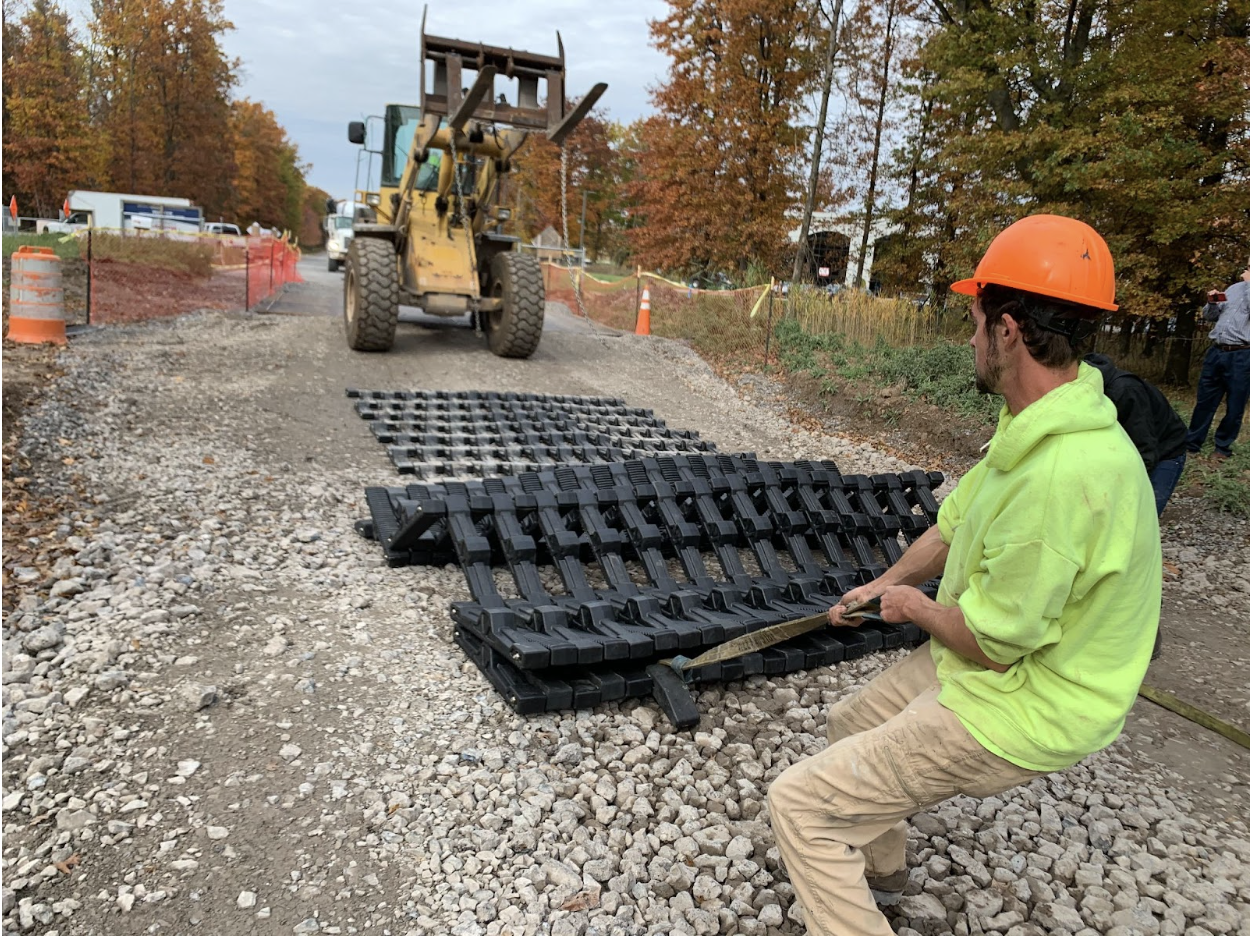
In fact, we innovated our RubberForm® Trackout Control Mat to be the simplest trackout control option to maintain. Like any other mat, ours will eventually get caked over with mud, dirt, and debris. When that happens, use a front loader to lift the mat up. Then shake it out. The mat is flexible, so all the dirt and debris should be easy to dislodge. Once it’s clean, lay it right back down again.
Easy trackout mat cleaning:
- Just lift
- Shake out
- Lay back down
What makes RubberForm® Trackout Mats different?
All portable trackout mats are, well, portable, and pretty much all of them do actually control mud and dirt trackout. So how does RubberForm® make ours better?
All our trackout mats are made from 100% recycled materials sourced domestically within 500-1000 miles of our factory in Lockport, NY. That means when you buy a mat, you’re helping us clean up our shared American backyard by diverting waste away from landfills and toward a much more useful purpose.
We engineer those recycled materials into a special super-strong composite that won’t chip, crack, crumble, or corrode in the searing heat, freezing cold, or heavy vehicle traffic. If you somehow manage to break a trackout block, our mats are fully modular: you can remove the broken block, replace it with a new one, and get back to work!
And what about setup or tracking pad cleanup? All you need to do is lift the mat with a front loader, lay it out, and get to work. Or, if you’re cleaning up, just do the reverse.
Why RubberForm®?
- 100% recycled materials
- 100% sourced domestically
- Manufactured at our Lockport, NY factory
- Easy to deploy, maintain, and remove
- Won’t chip, crack, or crumble
- We warranty our trackout blocks for 5 years
- Replacing broken blocks is easy to do
What’s next?
Now that you’re armed with all the knowledge of why you need trackout control, why portable mats are best, and how you can clean them, all you need to do is decide which mat is the best fit for your work. When you’re ready to talk about the simplest, toughest trackout mat on planet earth, give us a call.
Date Published: April 13, 2026