

What You Need to Know About Portable Electric Cable Support Towers
OSHA and NEC safety standards require power cables to be routed or elevated safely away from the places where people congregate, work, or pass through. This means that if you’re running a temporary jobsite like a construction area, or a permanent industrial facility, or even just holding a public event, you need to find a way to protect the folks present from unsafe electrical cables.
There are a few different options for electric cable safety we’ll walk through in this article, highlighting these main takeaways:
- Keep cables off the ground for essential safety and compliance
- Homemade cable support creates unnecessary risk
- Your cable support towers should be safe, stable, and easy-to-use
- Protect your people and productivity with a solid cable support system
Can’t I Just Make My Own Cord Trees?
One of the most common ways of putting a bandaid on your cable support problem is to make your own juryrigged cable tower. This is an especially common solution in the construction industry. All you have to do is slap some wood and nails or screws together and you’ve got a cord tree. It may not look nice and it may not last, but at least it’s extremely unsafe to boot!
The problem with homemade cord trees is that they aren’t very stable and, being made of wood, will conduct electricity when wet. That defeats the whole purpose of the safety measure. Don’t risk accidents and legal liability trying a half-measure.
So what should you actually use?
Electric Cable Support Safety Standards
We recommend a portable cable support tower.
Any temporary electric cable support structure needs to meet applicable OSHA and NEC safety standards. Look for towers that are ETL or ETL-US certified to handle the electrical load capacity you require. Appropriate grounding and bonding must be integrated into the design. Make sure the width, weight capacity, and maximum cable heights match the cable lengths you need to support. Don’t overload the tower beyond specs.
The Best Wire Towers Have Simple Setup
Since cord trees are usually temporary installations, you want the setup to be as simple and painless as possible.
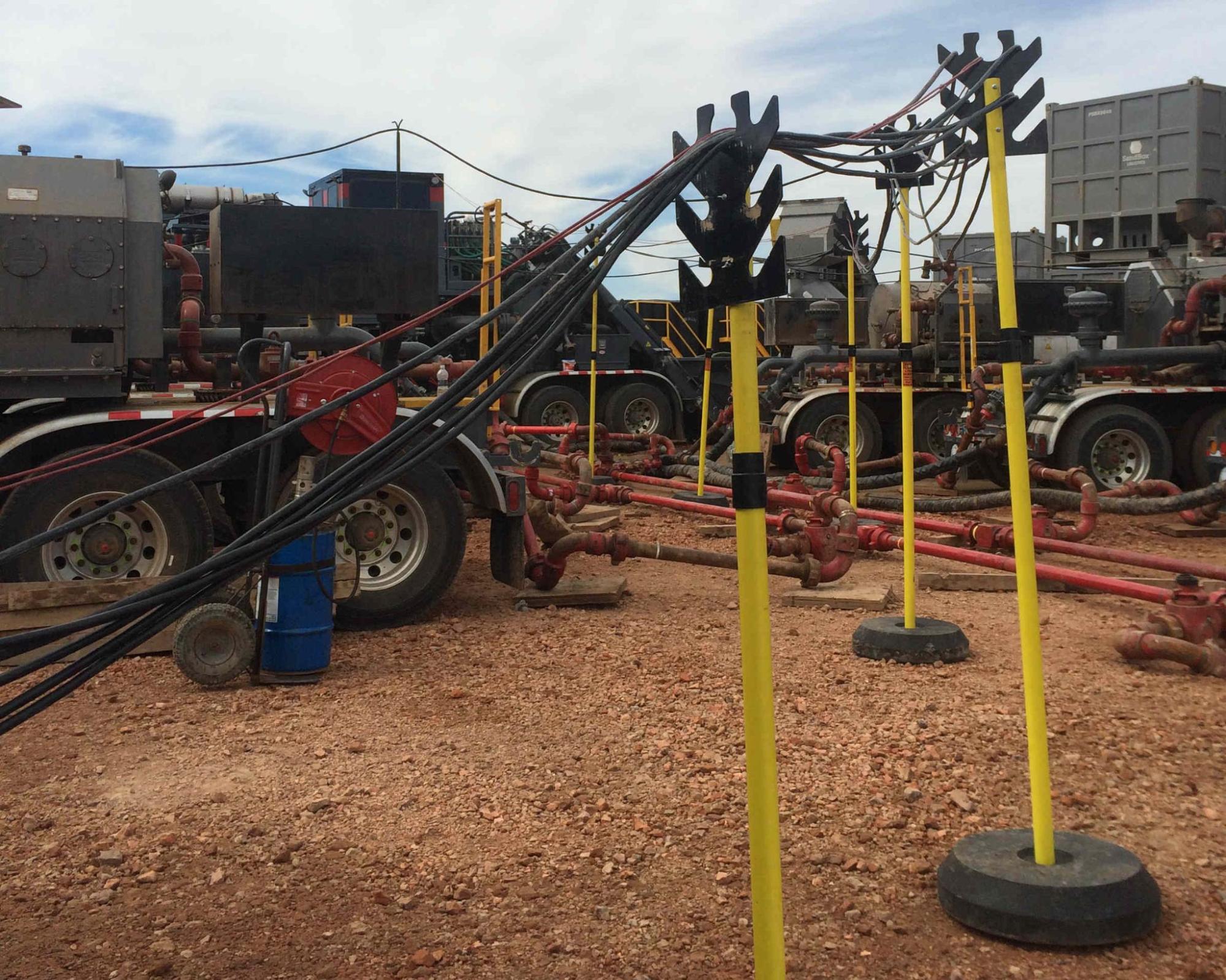
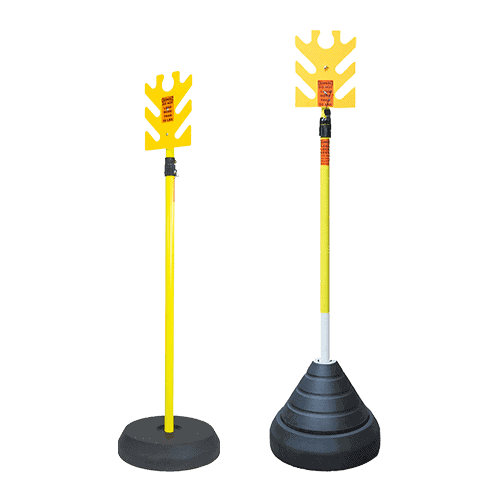
Our RubberForm® portable electric cable support tower features a collapsible design that allows quick, easy setup. The tower sections connect together securely using locking pins, enabling you to steadily raise the frame in five or 10-foot increments. Once positioned, the side arm extensions can be adjusted to the necessary width to safely distribute the electrical load.
6 reasons you’ll love your RubberForm® portable electric cable support tower:
- Easy to deploy round base (just roll into place)
- Telescoping pole (up to 10 ft height!)
- Non-conductive
- Each tower can hold 100 lbs of weight
- Standard or heavy-duty base depending on your needs
- The feeling of being NEC and OSHA compliant
What Cabling Options to Look For
Look for tower designs that secure cabling along the entire run from the ground up to the tip. Integrated cable hooks, loops, or a ladder-type design allow consistent attachment points for the wiring (our own RubberForm® tower uses a cable “antler” for this). Verify the tower offers enough cable capacity for your needs. Some portable support towers also incorporate internal conduits or cable trays within the legs to neatly contain all the wiring. Towers with side-mounted arms can also accommodate exterior cable runs if required.
Additionally, if you need to load your cable towers at close to their max capacity, or they are likely to be bumped, jostled, or blown in the wind, you should consider a Heavy Duty Cable Support Tower. The additional weight gives them extra stability (and gives you fewer headaches and worries).
What now?
For temporary power wiring needs, a portable cable support tower checks all the boxes in terms of safety, durability, capacity, and ease of use on site. Just be sure to follow electrical codes and weight limits, and routinely inspect for any wear or damage over time. With proper maintenance, a portable tower will protect your vital cables job after job.
If you want a regular or heavy-duty cable support tower that is reliable, easy-to-use, and can be reused again and again after that first job is done, give us a call at RubberForm®. We’ll help you understand whether the standard or heavy duty tower is right for you.
Date Published: May 23, 2024