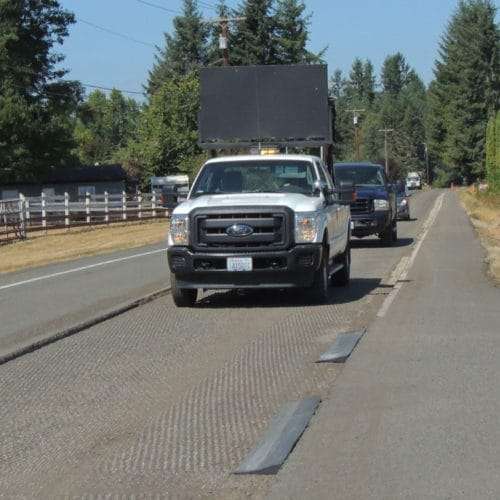
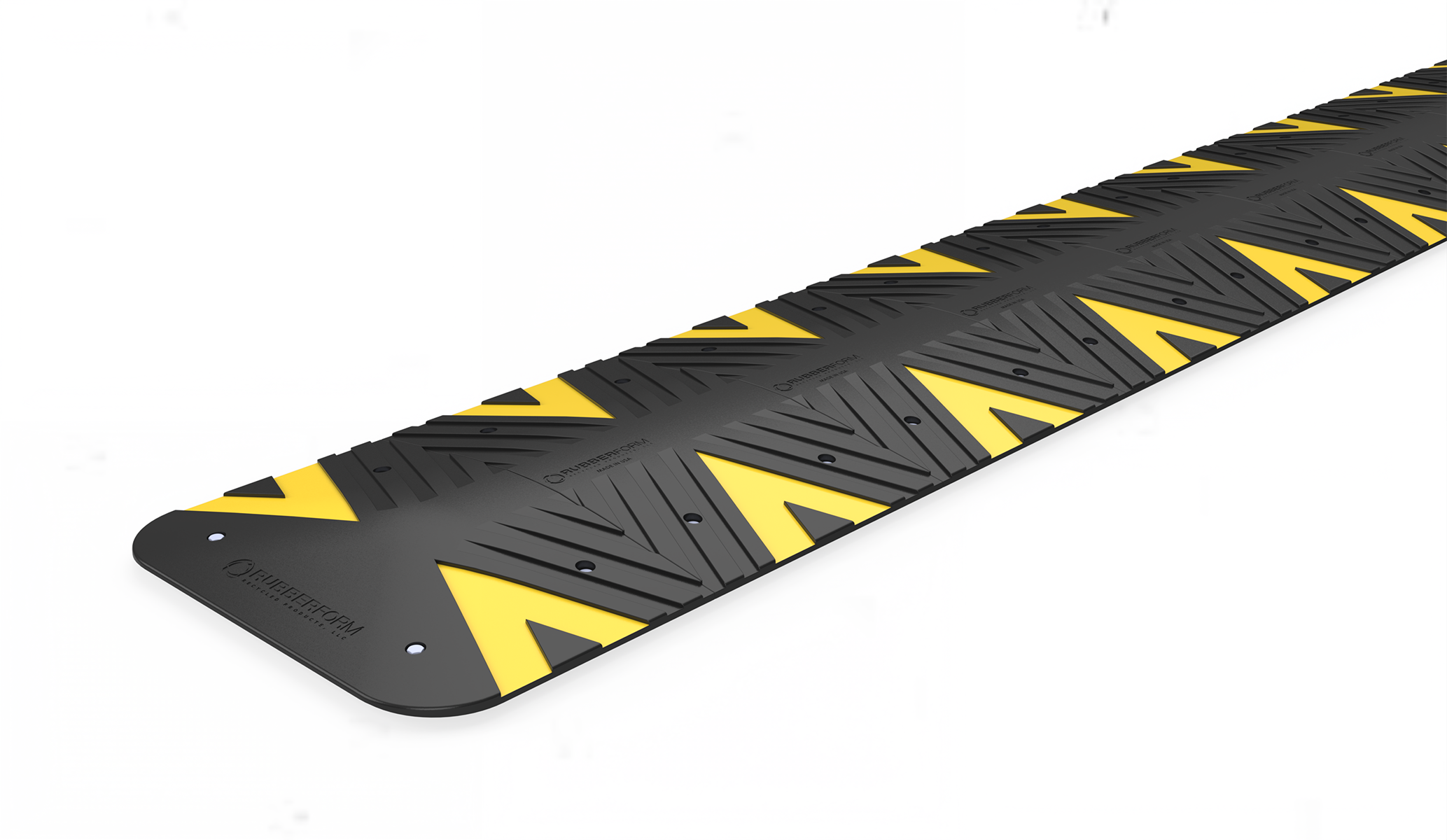

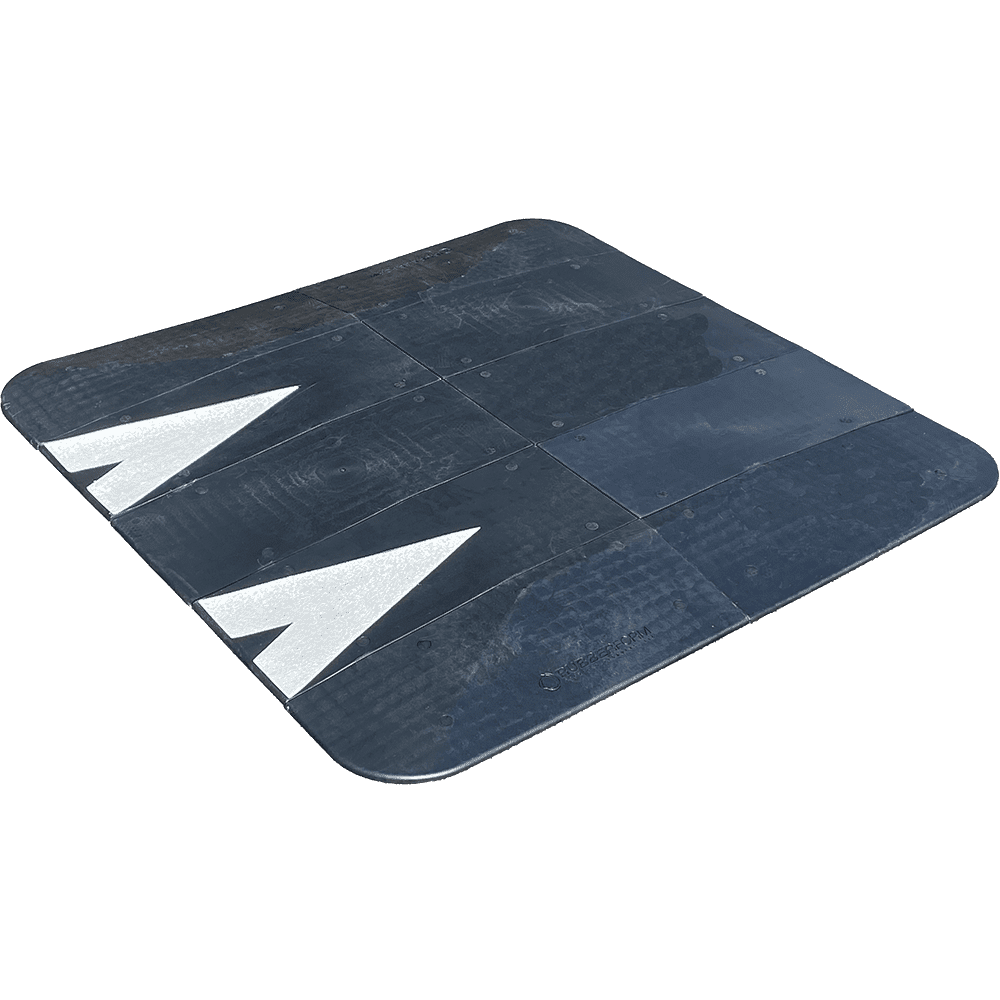

A speed cushion is a traffic calming device that slows passenger vehicles while letting emergency vehicles pass at speed. It sits in the road like a speed hump but has cutouts, or wheel gaps, spaced so that wide-axle fire trucks and ambulances can straddle it unimpeded, while narrower passenger cars must ride over the raised sections and slow down. That single feature is what sets cushions apart from every other vertical calming device.
Because of it, speed cushions (also called road cushions or speed pillows) have become a popular choice for municipalities that want to calm traffic on emergency routes without delaying response times. This guide explains how they work, how they compare to speed bumps, humps, and tables, what they are made of, and where to use them.
Key Takeaways
- A speed cushion slows cars while letting emergency vehicles straddle the wheel gaps and pass at speed.
- Cushions calm traffic as gently as a speed hump for passenger vehicles, without the sharp bump of a speed bump.
- Traditional concrete and asphalt cushions crack and need seasonal maintenance; recycled rubber cushions do not.
- Cushions are ideal for residential streets and emergency routes where response time matters.
What Makes a Speed Cushion Different?
The defining feature of a speed cushion is the wheel gap. A speed cushion is a raised device, gentle enough that a passenger car crossing it slows to a safe residential speed, but built with gaps spaced to match the wide wheelbase of emergency vehicles. A fire truck or ambulance lines its wheels up with the gaps and passes without slowing; a car cannot, so it slows down.
This solves a real problem for towns. On a normal speed bump, speed hump, or speed table, an ambulance carrying a critically ill patient has to slow like anyone else, and hitting a hard impediment at speed can be harmful. For that reason, emergency routes and hospital approaches often can’t use traffic calming at all. A speed cushion lets a municipality calm those roads without slowing emergency response, which is why adoption has grown quickly across the US.
Speed Cushion vs. Speed Bump, Hump, and Table
Each vertical traffic calming device is built for a different target speed and setting. Choosing the right one comes before choosing a product.
| Device | Slows traffic to | Best for | Lets emergency vehicles pass? |
|---|---|---|---|
| Speed bump | 2 to 5 mph | Parking lots, private roads, school/park zones | No |
| Speed hump | 10 to 15 mph | Residential streets | No |
| Speed table | 10 to 20 mph | Pedestrian crossings, intersections | No |
| Speed cushion | Residential speeds for cars | Emergency routes, residential streets | Yes (wheel gaps) |
Speed bumps are short and steep, so they are the most aggressive and best where traffic flow must nearly stop. Speed humps are longer and gentler, suited to residential streets. Speed tables are flat-topped and often span the road as a raised crosswalk. The speed cushion is the only one of the four that lets large emergency vehicles through, which is its main purpose. If you are choosing the device itself rather than a product, our guide to traffic calming devices and the difference between speed bumps and speed humps go deeper.
What Are Speed Cushions Made Of?
Speed cushions come in three materials: concrete, asphalt, and recycled rubber. The earliest cushions were poured from concrete or asphalt, like traditional bumps and humps. That is cheap at first, but installation is loud, disruptive, and messy, and concrete or asphalt needs seasonal maintenance, especially in cold or wet regions, or it cracks and crumbles faster than it otherwise would. Eventually, it decays past the point of use and must be demolished and cleared before a new one can go in.
Recycled rubber cushions avoid that cycle. A rubber composite cushion does not chip, crack, crumble, or corrode; it installs without heavy equipment and can be removed and relocated as needed.
Why Rubber Speed Cushions Work Better
For most municipalities, a recycled rubber speed cushion is the more practical long-term choice. RubberForm® Speed Cushions are made from a custom composite of 100% recycled American rubber and plastic that is light enough to install and relocate easily, yet strong enough to hold up under heavy traffic and extreme temperatures without breaking down.
- Simple installation. A small crew with hand tools can set a row of cushions in a few hours, closing only the lanes they need: no heavy machinery, no large crews, no multi-day road closures.
- Modular repair. If a section breaks, you replace that module rather than the whole cushion. Pop the damaged part out, pop the replacement in.
- Seasonal removal. Some municipalities pull their cushions each winter so snowplows run clean, store them, and lay them back down in spring.
- Recycled and American-made. The cushions are made from 100% recycled post-consumer or post-industrial material and manufactured in the USA, which keeps tax dollars domestic and diverts waste from landfills.
A Note on Cheap Imports
Buying the cheapest imported cushion is the obvious way to save upfront, but cheap products cut corners on material, manufacturing, or quality control. RubberForm® reports that when it lab-tested its own products against competing imported safety products, the competing products showed unsafe levels of toxic chemicals that can leach into soil and water, while its own tested clean. American recycled-material standards carry strict non-toxic requirements that many overseas “recycled” products do not meet.
Where to Use Speed Cushions
Speed cushions fit best where you need to calm traffic but cannot afford to slow emergency response. Common placements:
- Emergency routes and hospital approaches where fire trucks and ambulances travel frequently.
- Residential streets that need gentler calming than a speed bump provides.
- Through-roads and collectors where a full stop isn’t the goal, but speeds still need to come down.
As with any calming device, give drivers clear sightlines to each cushion and space multiple cushions evenly so traffic stays slow across the whole stretch.
Choosing RubberForm® Speed Cushions
If a rubber cushion fits your municipality, RubberForm® Speed Cushions install in hours, last for years without cracking, and let emergency vehicles pass unimpeded, all from a 100% recycled, American-made composite. When you are ready to make your streets safer, call us or send a message.
Date Published: September 8, 2022