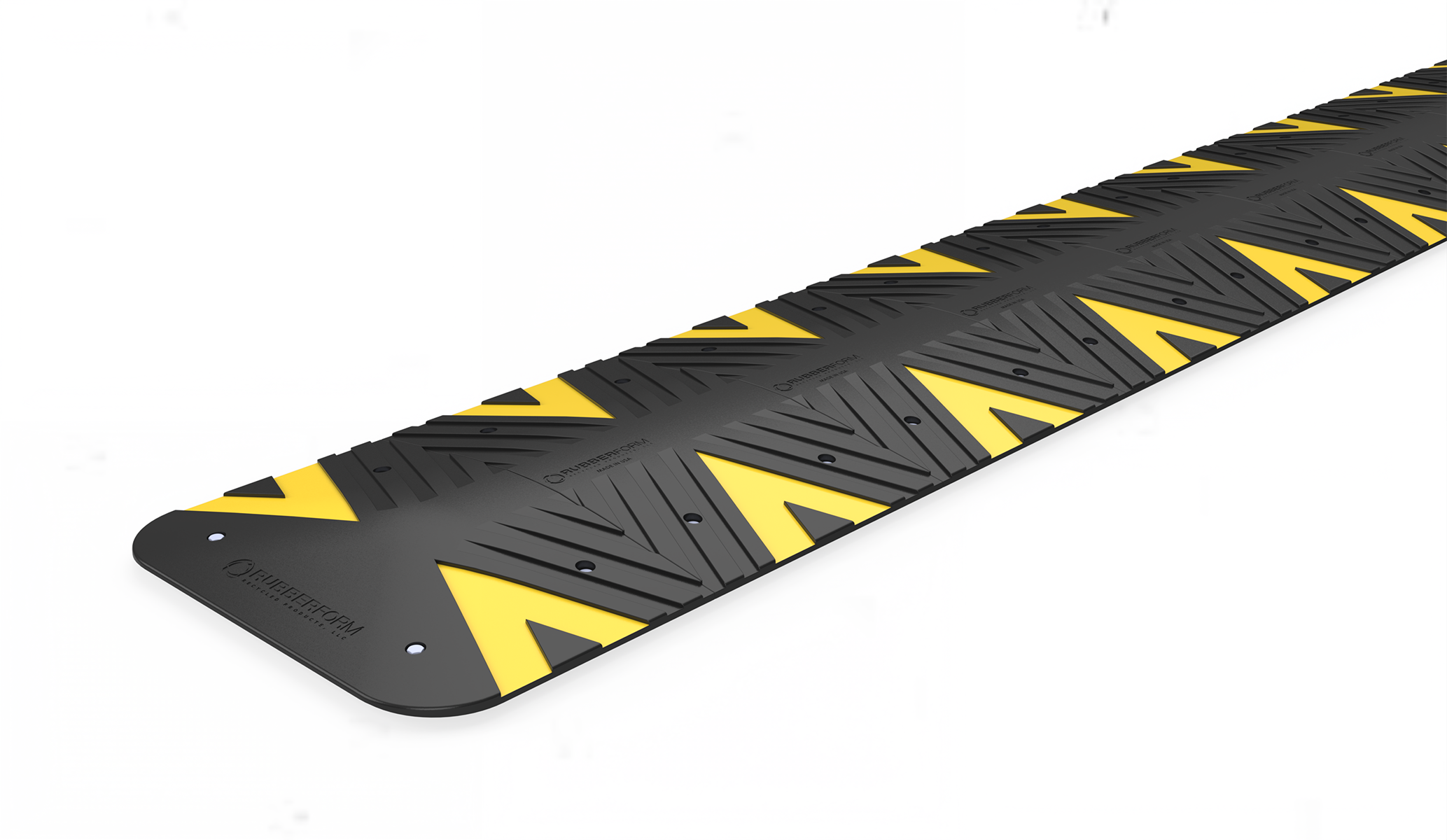


Wheel stops (also called parking blocks, parking stops, car stops, or parking bumpers) keep vehicles from rolling too far into a space and damaging buildings, sidewalks, curbs, and landscaping. Every parking lot needs them. The real question is which material to buy, and for most lots it comes down to two options: traditional concrete or recycled rubber.
This article compares the two head-to-head on the factors that actually affect your budget and your lot: upfront cost, installation, durability, safety, appearance, and sustainability. It also covers the cases where concrete still makes sense so that you can make the right call for your specific situation.
Key Takeaways
- Concrete wheel stops are cheap to buy but carry hidden long-term costs in installation, replacement, and vehicle damage.
- Rubber wheel stops cost more upfront but are lighter, faster to install, and last longer without chipping or cracking.
- Concrete can be the better choice for permanent, heavy-duty installations where appearance and reconfiguration don’t matter.
- For most commercial lots that favor flexibility, safety, and looks, recycled rubber is the more practical long-term investment.
Concrete vs. Rubber Wheel Stops at a Glance
Here is the side-by-side before the details. Concrete wins on sticker price; rubber wins on nearly everything that costs money after purchase.
| Factor | Concrete | Recycled Rubber (RubberForm®) |
|---|---|---|
| Upfront cost | Lower | Higher |
| Weight | 200+ lbs | ~23 lbs |
| Installation | Heavy equipment + crew | One person, hand tools |
| Durability | Chips, cracks, spalls over time | Will not chip, crack, crumble, or corrode |
| Vehicle damage on impact | Higher (rigid) | Lower (gives on impact) |
| Reconfiguring the lot | Difficult, often needs demolition | Unbolt and relocate |
| Appearance over time | Degrades, stains | Holds color; color polygons can be replaced |
| Sustainability | Not recyclable | 100% recycled material |
| Warranty | Varies | 5-year product / lifetime polygons |
(Figures from RubberForm® product specs; confirm current values before publishing.)
Upfront Cost
Concrete has a cheaper upfront cost. It is inexpensive to produce and has been the default parking-stop material for decades because it is strong, heavy enough to stop a vehicle, and cheap to buy. If all you can see is the sticker price, then concrete looks like the winner.
The catch is that the initial price is the smallest part of a wheel stop’s total cost. Installation, maintenance, replacement, and vehicle-damage claims all land after the sale, and that is where the comparison shifts.
Installation
Rubber is far cheaper and faster to install. A concrete wheel stop weighs 200 pounds or more, so installing one typically requires heavy machinery like a forklift, Bobcat, or front loader plus several people to position it. That labor and equipment add real cost to every unit.
A RubberForm® rubber wheel stop weighs about 23 pounds. One person can unload it, set it in place, and bolt it down with hand tools, with no heavy equipment and far less risk of injury during installation: lower transportation cost, lower labor cost, and a faster job.
Durability and Maintenance
Rubber lasts longer with less upkeep. Once concrete stops are installed, weather and impacts start wearing them down. Rain, freeze-thaw cycles, heat, and the occasional bump cause concrete to chip, crack, and spall, and it looks worse each year until it has to be replaced. When a car strikes a concrete stop with anything other than its tires, both the vehicle and the stop tend to take damage.
Recycled rubber stops flex slightly on impact instead of shattering, so they resist chipping and cracking. They also resist crumbling and corrosion under rain, ice, snow, and seering heat. That means fewer replacements and less damage to the vehicles that hit them.
Safety and Visibility
Rubber has the edge on both counts. Because it gives on impact, a rubber stop is gentler on vehicles than a solid concrete slab. RubberForm® stops also use molded-in colored polygons and safety-yellow end caps for high visibility, with color options for standard, accessible, emergency, and eco-friendly parking spaces. Concrete stops rely on painted surfaces that fade and need repainting to stay visible.
Appearance and Branding
Rubber holds up and can be branded; concrete degrades. Concrete is useful but plain, and it stains and crumbles as it ages. Recycled rubber stops keep their look and can be made in custom colors or printed with a company logo, letting you build an incredible branded customer experience from parking to purchase.
Sustainability
Rubber is the clear environmental choice. RubberForm® wheel stops are made from 100% recycled material, diverting scrap tires from landfills for every wheel stop produced. Concrete is not recyclable; once damaged, it must be removed and discarded, adding waste. For any organization that has sustainability goals or LEED considerations, recycled rubber is the straightforward pick.
When Concrete Still Makes Sense
Concrete is not always the wrong answer. It can be the better choice for a permanent installation that will never be reconfigured, where you don’t mind the ugliness of concrete, and the lowest possible purchase price is the priority, or where an existing spec or local requirement calls for concrete specifically. If the stops will be poured-in or set once and left for the life of the lot, and none of rubber’s advantages in weight, flexibility, or looks apply to your situation, you might favor concrete’s low upfront cost.
For most commercial lots, though, the flexibility to relocate stops, lower installation costs, less vehicle damage, and a longer service life make recycled rubber the better long-term value.
Choosing RubberForm® Rubber Wheel Stops
If rubber fits your lot, RubberForm® Wheel Stops are made from 100% American recycled materials, install in minutes with one person, and come with a 5-year product warranty and a lifetime warranty on the color polygons. You can customize them to your colors or print them with your logo for a spectacular branded lot.
Customizing is simple: send your Pantone or CMYK numbers for custom color, send high-quality images and graphic standards for a custom logo, and you get an incredible branded experience in your parking lot.
When you are ready to upgrade your lot, call us or send a message.
Related Reading
- Not sure you need them? See whether my parking lot needs wheel stops.
- Interested in the recycled angle and lot safety? See recycled wheel stops and parking lot safety.
Date Published: July 2, 2020