
We build a lot of new and beautiful things. That’s good. But everything has a cost, and the price of new construction is a whole lot of upheaval in the natural environment.
Construction projects excavate the earth, uproot trees and other vegetation, lay foundations, pipes, wiring, pour concrete, raise walls and fences–and all of it disrupts the environment to some extent, but it doesn’t have to destroy it.
A Stormwater Pollution Prevention Plan (SWPPP) is a document that nearly every construction project needs. It outlines all the best practices your work crews are using to keep the local public and private water systems safe from soil and chemical contamination.
In this article, we will discuss the following key takeaways:
- A Stormwater Pollution Prevention Plan (SWPPP) protects waterways and keeps construction projects compliant
- An effective SWPPP combines erosion control, sediment management, and pollution prevention
- Trackout control is a critical part of preventing stormwater pollution
- Reusable trackout control mats offer a simpler alternative to traditional gravel entrances
What does a SWPPP do?
Practically speaking, for a contractor, architect, or property owner, an SWPPP keeps you compliant.
For everyone else, the SWPPP protects the nearby public and private water systems from contamination. It does this in two major ways.
First is erosion control. These best practices keep as much of the soil in the project area from moving in the first place. The less runoff you have to deal with, the better.
The second major function is sediment control. For any potential contaminants (dirt, mud, rocks, debris, oil, chemicals) that are disturbed, sediment control catches them before they can run off into storm drains and other shared water systems.
Does my site need an SWPPP?
Federal requirements for an SWPPP (your state might be stricter) kick in for any site 1 acre or larger in size.
The important measure is the amount of “disturbed” land. Any ground that is cleared, graded, or excavated counts. Basically, if you do something to move the soil directly (digging) or do something that makes it easier for weather (particularly rain) to move the soil, that is considered “disturbing.”
Dividing a project into phases can’t work around this rule, by the way. Even if each portion of a larger project disturbs less than an acre, if the total project disturbs more, you need an SWPPP.
Who’s responsible for the SWPPP?
Generally, the contractor or site developer is. Whoever is legally operating the construction site needs to create and adhere to the SWPPP. There can be multiple parties who share responsibility for it as well.
There is also a different type of SWPPP that applies to industrial sites that could come into play once construction completes.
What needs to be in an SWPPP?
Every SWPPP needs six core components. We’ll walk through each one by one. Quick caveat: you should absolutely consult with someone who knows the legal requirements of an SWPPP while drafting one. It’s not worth the liability to wing it.
First, you need a site description. That includes the location and extent of the site, its shape, how much acreage you expect to disturb, what construction activities you’ll need to do, the schedule you’re following, and any other environmental conditions that are relevant to the physical site.
Next, you need an actual site map. This is a drawing that visually demonstrates much of the description, particularly which parts of the ground will be disturbed: drainage patterns, discharge points, bodies of water, stockpiles, and pollution control measures.
After that you need to get specific about your erosion, trackout, and sediment controls. Which BMPs (best management practices) are you using to accomplish the SWPPP’s goals? Where are they installed? How will they be maintained?
Then you do the same for pollution prevention measures like how you handle or store fuel, chemicals, waste products from construction, concrete washout, and anything else debris or chemical-related.
Fifth, you need to identify a few key people: those responsible for implementing the plan and those overseeing it. You also need to document schedules for inspections and training necessary for the plan.
The final core component of the SWPPP is recordkeeping: document how inspections, maintenance, and corrective actions get recorded. You’ll also need to document how the plan can be revised in case any site conditions change.
This is not an exhaustive list, just something to get you started. Remember to work with a qualified professional when designing your SWPPP.
Don’t create the SWPPP by yourself.
What measures can help prevent stormwater pollution?
Here you’ll find a series of BMPs to use in your SWPPP.
Erosion control measures are a first line of defense against the pollution of local water systems.
They include temporary seeding and vegetation, mulch, and erosion control blankets to stabilize the exposed or disturbed soil. A second set of BMPs for erosion control deal with diverting runoff away from vulnerable areas of earth. This includes digging channels or ditches to guide the runoff safely around the active work area or using artificial or earthen dams, dikes, or berms to block and redirect any potential runoff.
Next you have methods of sediment control.
Once dirt, mud, stone, or debris has been dislodged, sediment control systems prevent it from being tracked out onto public roads (and ultimately into shared water systems).
Silt fences combine with dug channels or artificial berms to catch loose sediment from washing out with the runoff. Sediment traps and basins collect runoff and allow the debris to settle to the bottom before the water is removed. Check dams slow the flow of water through drainage channels to improve the efficiency of the other sediment controls.
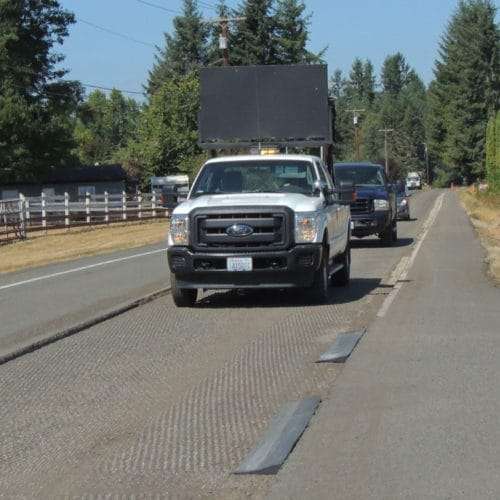
A stabilized construction exit prevents sediment caked on the wheels of work vehicles from leaving the work site and being tracked out onto the road. The most common method is to use a gravel bed to shake and jostle the wheels as the vehicle drives over it. A new and innovative alternative is the dedicated rubber or plastic trackout control mat. This provides the same function as gravel, but can be reused where gravel or stone has to be thrown away. RubberForm®’s Trackout Control Mat is a tough, easy-to-use example.
The final defense of sediment control is some sort of inlet protection on a storm drain itself that prevents sediment that has reached that part of the water system from getting inside.
Erosion and sediment control are only part of the SWPPP
Stormwater pollution isn’t limited to dirt, mud, and debris.
The erosion and sediment control methods listed above are not as effective in preventing spilled chemicals or fuels from polluting local water systems.
Think of it as good housekeeping. You need to store and dispose of waste products properly. If your site stores any hazardous materials or chemicals, you need to take basic spill containment measures. You need to follow best practices when it comes to fuel management to minimize spills during refueling and properly store the fuel. Finally, you need to follow best practices when managing your concrete washout: cleaning all involved equipment and removing the excess slurry without letting it spill out into the local water system.
Let’s talk about trackout control
Your construction entrance is one of the most visible parts of your project. If you aren’t using any trackout control method or using one improperly or inadequately, it will be immediately obvious to anyone driving by.
You’ll have dirt, mud, and debris strewn all over the road leading out of your site. And any vehicle exiting the site will be noticeably caked with sediment of all kinds. It’s a surefire way to draw community complaints and regulatory attention–then ultimately, fines.
A stabilized construction entrance or exit is the most common way of providing trackout control on a construction site.
How do I create a stabilized construction entrance?
There are three primary trackout control methods used in a stabilized construction entrance, two of which can be combined and used simultaneously.
The traditional stabilized construction entrance requires you to excavate a patch of ground, often around six inches deep, lay down a mesh or canvas, then fill the space with stone or gravel. Heavy vehicles exiting the work site roll over the gravel bed, which both digs into the tire treads to loosen any dirt, mud, and debris, and greatly jostles the vehicle, knocking much of the sediment free.
A trackout control mat is usually made of plastic or rubber (or, for our RubberForm® mats, a tough composite of both) fitted all along its surface with bumps or “teeth”. These perform the same two functions of the gravel: they dig into tire treads to loosen sediment and shake the vehicle enough at the same time to knock most of the rest of it free.
The third method commonly used is some sort of vehicle wash station, from as simple as a manually-sprayed water hose to a sophisticated automated wash station that calculates angle and water usage based on scanning vehicles as they pass through. You can combine this method with the first two for an even more efficient and complete sediment control system: vehicles pass over gravel or mats first to dislodge the bulk of their sediment, then are washed of the remainder before exiting the construction site.
How do I choose which trackout method to use?
Traditional Stone Stabilized Construction Entrances
Most contractors have used gravel beds before and are familiar with their setup and cleanup. Gravel or stone is relatively cheap to buy once, so startup costs feel low.
The problem with stone is twofold: long-term costs and time. Gravel is cheap to buy, but you have to buy it again every time. You also have to dispose of it, an additional cost. What you pay in time might be even worse.
Excavation, laying down the canvas, and pouring in the gravel or stone takes quite a bit of setup time. But it doesn’t stop there. As vehicles roll over the gravel bed, the stone will get compacted down. It needs to be manually turned over periodically to maintain effectiveness. Then, when you finish the job, you need to collect the gravel or stone for disposal, fill the pit back up, and maybe even seed grass on top to repair some of the damage caused by excavation.
Rubber/Plastic Trackout Control Mats
Trackout mats have a fixed length and width. You will most likely need several grouped together to fit the full length and width you need at any given construction entrance. They deploy quickly with a small team. Some mats need additional brackets to hold together or anchors to keep them in place.
All mats will get caked with dirt, mud, and debris over time. The difficulty of cleaning varies. Some mats need to be lifted up, sprayed down, or worked over with a special cleaning tool that can get the debris out from between the mat’s “teeth”. Our RubberForm® Trackout Mats just need to be lifted, gently shaken out, then placed back down again.
Cleanup for any trackout mat is much simpler than a traditional stone entrance. You just need to clean them one final time, then remove them for storage. Some mats don’t fold and will need a relatively large space for storage. Our RubberForm® Trackout Mats fold into a convenient z-shape (like an accordion or a slinky) for compact storage.
Site teardown is minimal because rubber or plastic mats don’t require any excavation.
Washing Stations
Also known as washpits, these stations are effective secondary sediment controls. Install them after your primary gravel bed or trackout mat setup to fully clean off vehicles before they leave your site. Washpits are not effective as your sole sediment control method.
What’s so special about RubberForm® Trackout Control Mats?
Our mats are made of a brand new recycled rubber rubber/plastic composite material that is even stronger and more flexible than before. It won’t chip, crack, crumble, or corrode in extreme heat or cold, rain, ice, snow, or under heavy use. If you do somehow manage to break one of our trackout blocks, our mats are fully modular and maintainable. That means you can call us for a replacement block, slide the damaged block out, and slide the new block in.
Our mats deploy in minutes from their compact storage z-fold. Using a front loader, just lift them up, lay them out, and get to work. A single operator in a front loader can do it by themselves (or another assistant on foot can help stretch the mat out to move even faster).
The mat’s weight will keep it in place: no anchors or brackets needed. Under heavy use, the mat will eventually get caked in sediment. Simply lift it up again with a front loader, gently shake it out (you can also hose it down if you like), and lay it down again. No brushes, brooms, shovels, or other special cleaning tools needed.
When the work is done, lift the mat, shake it out, then fold into its compact z-shape for storage until the next job.
7 reasons you’ll love our trackout mats
- Modular and maintainable for years and years
- Composite rubber/plastic material won’t chip, crack, crumble, or corrode
- Easy to deploy: just lift, lay out, and get to work
- Easy to clean: just lift, shake, and lay back down
- Easy to store: just lift and fold into compact z-shape
- Reuse again and again
- Made from 100% American-sourced recycled materials
Am I ready for my SWPPP?
You’re a lot closer. Remember to have a qualified professional build the SWPPP for your site.
And don’t forget that setting these controls up is only half the regulatory requirement: you also need to regularly inspect and maintain them.
However you manage the other elements of your SWPPP, you can count on RubberForm® Trackout Mats for your stabilized construction entrances. Give us a call, we’d love to walk you through your options.
Date Published: November 17, 2026